

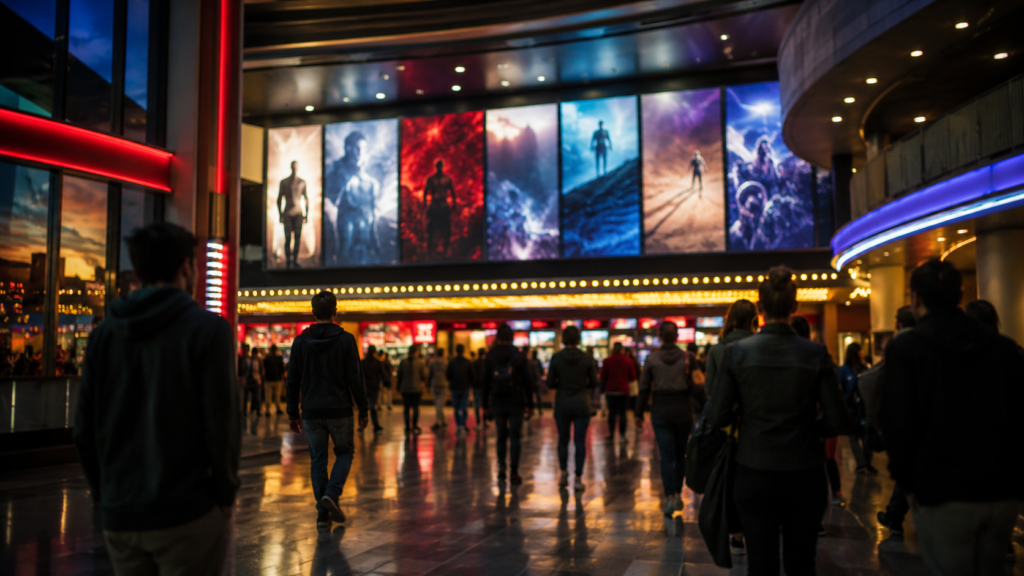
Hollywood’s biggest bet right now isn’t on a bold new idea, it’s on characters audiences already know. This week alone offers proof. DC Studios’ “Supergirl” opened in theaters on June 26, 2026, becoming the latest test of whether superhero movies still draw a crowd. Meanwhile, Universal and DreamWorks confirmed that “Donkey,” a spin-off built around Eddie Murphy’s beloved “Shrek” sidekick, will arrive in 2028. Add in recent reboots of “Masters of the Universe” and “Scary Movie,” and a pattern becomes clear: the movie business is leaning harder than ever on familiar franchises, sequels, spin-offs, and reboots to fill theaters in an increasingly crowded entertainment market.
This article looks at what’s actually happening across the industry right now, using verified information from studios and trade publications, and explains what the trend means for audiences, actors, cinemas, and the future of moviegoing.
Why Movies Are Leaning on Franchises and Familiar Names
Original films still get made, but studios are increasingly prioritizing properties with existing fan bases. The logic is straightforward: a known character, comic book, toy line, or animated classic already comes with built-in audience awareness, which lowers some of the marketing risk compared to launching something entirely new.
That doesn’t mean every franchise release is a guaranteed hit. As this week’s box office data around “Supergirl” shows, even big-budget films built on recognizable IP can face real uncertainty once they reach theaters.
What it means: For audiences, this shift means more sequels, spin-offs, and reboots arriving each year, often clustered around the same release windows. For studios, it means depending on a smaller number of “safe” bets rather than spreading risk across many original ideas.

Supergirl: A Direct Test of Superhero Demand
“Supergirl,” directed by Craig Gillespie and written by Ana Nogueira, opened in theaters and IMAX across North America on June 26, 2026, with an international rollout that began June 24. The film stars Milly Alcock as Kara Zor-El, alongside Jason Momoa, David Corenswet, Matthias Schoenaerts, Eve Ridley, David Krumholtz, and Emily Beecham. It is the second film in DC Studios’ rebooted DC Universe, following 2025’s “Superman,” and is loosely based on the comic series “Supergirl: Woman of Tomorrow” by Tom King and Bilquis Evely.
This release matters beyond its own box office because of what it signals for DC Studios’ wider reboot strategy under co-CEOs James Gunn and Peter Safran. “Superman” launched the new DCU in 2025 to a strong reception. “Supergirl” is the first real follow-up, and how it performs will shape confidence in the franchise heading into future installments.
Supergirl’s Box Office Tracking
According to pre-release tracking reported by trade outlets including Deadline, Variety, and Box Office Pro, “Supergirl” saw its projected opening weekend slide significantly in the weeks before release.
| Tracking Stage | Projected U.S. Opening |
| Early tracking (several weeks out) | $55 million-plus |
| Mid-range tracking | $45–55 million |
| Final pre-release estimates | $39–50 million |
Industry estimates ahead of release placed the film in the $45 million to $50 million range domestically, with independent trackers projecting a softer $39 million to $45 million. By comparison, Pixar’s “Toy Story 5” was projected to remain the dominant film of the weekend, having already opened to a strong start the week prior.
These are pre-release estimates rather than confirmed final results, and actual numbers can shift once a film opens. Readers should check Box Office Mojo, Comscore, or official studio statements for confirmed figures once the weekend concludes.
What it means: A softer-than-expected opening for a DC Studios tentpole, arriving one year after a successful “Superman” launch, raises real questions about how reliably superhero films can perform without a built-in blockbuster ceiling. It does not necessarily signal the end of audience interest in the genre, but it does suggest demand for newer or lesser-known heroes may be less automatic than for flagship characters like Superman or Batman.
Shrek’s Universe Expands With Donkey
While DC tests its newest hero, DreamWorks is doubling down on one of animation’s most established franchises. Universal Pictures and DreamWorks Animation confirmed this week that “Donkey,” a spin-off about Eddie Murphy’s talking sidekick from the “Shrek” series, will arrive in theaters on June 30, 2028. The studios describe the film as an origin story explaining how a donkey became “Donkey,” with Murphy returning to voice the character he has played since the original “Shrek” debuted in 2001.
“Donkey” is directed by Charlie Bean, known for “The Lego Ninjago Movie” and the live-action “Lady and the Tramp,” and co-directed by Matt Flynn, a story artist whose credits include “The Wild Robot” and “Puss in Boots: The Last Wish.” Rebecca Huntley, a producer on “Kung Fu Panda 4” and “The Bad Guys,” produces.
The announcement arrives roughly a year ahead of “Shrek 5,” scheduled for June 30, 2027, which reunites Mike Myers, Murphy, and Cameron Diaz in their original roles, joined by Zendaya as a new character in the Shrek family.
Why Donkey Matters for Animation Strategy
The “Shrek” franchise’s four theatrical films, along with two “Puss in Boots” spin-offs, have collectively grossed billions of dollars worldwide since 2001. Greenlighting a third spin-off built around a supporting character, rather than a new original concept, shows how heavily animation studios are leaning on nostalgia and pre-established characters to reach multigenerational, family audiences.
What it means: Animation studios face the same pressures as live-action studios: family audiences are a reliable but competitive segment, and known characters reduce the marketing burden. A “Donkey” movie lets DreamWorks extend the “Shrek” brand without needing to introduce an unfamiliar world from scratch, much like Disney and Illumination have done with sequels and spin-offs of their own libraries.
Reboots and Legacy Franchises Across Hollywood
Supergirl and Donkey are not isolated examples. Several other 2026 releases show how widely studios are relying on legacy names:
- Masters of the Universe (2026): Amazon, MGM Studios, and Mattel Films released a live-action reboot of the Mattel toy franchise, starring Nicholas Galitzine as Prince Adam/He-Man, in theaters on June 5, 2026.
- Scary Movie (2026): Paramount Pictures released the sixth installment in the long-running horror-parody franchise the same weekend, June 5, with Marlon Wayans and other original cast members returning.
- Marvel Studios slate: Marvel’s upcoming theatrical releases include “Spider-Man: Brand New Day” (July 31, 2026), followed by “Avengers: Doomsday” (December 18, 2026) and “Avengers: Secret Wars” (December 17, 2027), all extensions of existing characters and storylines rather than new original franchises.
- Disney sequels: Disney’s 2026 release calendar includes continued reliance on established franchises and sequels as part of its broader theatrical strategy.
These titles illustrate a wider industry pattern: rather than competing original concepts against one another, major studios are scheduling known franchises into the same release windows, sometimes directly against each other, betting that brand recognition will carry audiences through a packed calendar.
What it means: For cinemas, this creates a calendar dominated by a handful of high-profile weekends rather than a steady, even spread of releases. For audiences, it can mean more choice among familiar titles, but fewer original stories competing for the same big-screen attention.
What This Trend Means for the Industry
The reliance on franchises, reboots, and spin-offs touches nearly every part of the movie ecosystem:
- For audiences: More sequels and reboots can mean comfort and familiarity, but also a narrower range of new ideas reaching wide theatrical release.
- For studios: Known IP reduces some marketing risk, but it does not guarantee box office success, as Supergirl’s tracking shows. Budgets for franchise films are also typically much higher, raising the financial stakes if a film underperforms.
- For actors: Joining an established franchise can offer career visibility, but it also invites comparisons to beloved earlier versions of a character.
- For cinemas: Theatrical chains benefit from concentrated blockbuster weekends but face scheduling pressure when multiple major franchise films compete for the same release dates.
- For streaming platforms: Franchise films that underperform in theaters often move to streaming faster, while studios use exclusive windows on services like HBO Max and Disney+ to extend a franchise’s reach after its theatrical run.
- For the future of movies: The success or failure of titles like Supergirl will likely influence how willing studios are to invest in newer or lesser-known characters versus sticking to the most bankable, established names.
Fresh Global News Analysis
The current moment in Hollywood is less about any single franchise and more about how studios are managing risk in a crowded, expensive marketplace. Supergirl represents the higher-risk end of franchise filmmaking: a known universe, but a less mainstream character carrying a nine-figure budget. Its tracking numbers suggest that even strong studio backing does not automatically translate into blockbuster-level demand.
Donkey represents the opposite calculation. DreamWorks is extending a globally beloved, decades-old brand through a supporting character with built-in goodwill, scheduled years in advance, and timed deliberately around “Shrek 5.” It is a lower-risk move designed to capitalize on nostalgia rather than test new ground.
Together, these two cases al, alongside reboots like Masters of the Universe and Scary Movie, show that the movie industry isn’t shifting toward franchises as a creative preference, but largely as a financial strategy in an environment where original films carry more uncertainty at the box office. Readers should note that box office figures, release dates, and franchise plans can change, and official studio channels remain the most reliable source for the latest updates.
Key Takeaways
- Supergirl’s opening weekend box office tracking slipped from above $55 million to the $39–50 million range ahead of release, raising questions about superhero demand beyond top-tier characters.
- DreamWorks and Universal confirmed a Donkey spin-off movie for June 30, 2028, with Eddie Murphy returning to voice the character, one year after Shrek 5’s 2027 release.
- Reboots like Masters of the Universe and Scary Movie reflect Hollywood’s broader strategy of leaning on legacy brands rather than new original concepts.
- Marvel’s upcoming slate, including Spider-Man: Brand New Day and two Avengers films, continues the same franchise-first pattern at Disney.
- This approach reduces some marketing risk for studios but concentrates box office competition into a smaller number of high-stakes release weekends.
- Readers should check official studio sites for the latest confirmed box office numbers and release schedules, as these can change.
Conclusion
The movie industry’s current direction is unmistakable: franchises, reboots, and spin-offs dominate release calendars because they offer studios a familiar foundation in an unpredictable market. Supergirl shows that even franchise films carry real box office risk, while Donkey shows how animation studios are using nostalgia to secure family audiences years in advance. Whether this strategy keeps paying off may depend on how audiences respond to the next wave of reboots and spin-offs arriving through 2028 and beyond.
Frequently Asked Questions
Q1. Why are movies shifting toward franchises and reboots?
Studios see known characters and brands as lower-risk investments in a competitive market, since audiences already recognize them, even though box office success is never guaranteed.
Q2. Why is Supergirl important for DC Studios?
It is the first major follow-up to 2025’s Superman in the rebooted DC Universe, making its box office performance an early signal of audience interest in DC Studios’ broader plans under James Gunn and Peter Safran.
Q3. What does the Donkey movie mean for the Shrek franchise?
It shows DreamWorks is willing to expand the Shrek universe through supporting characters, not just direct sequels, using nostalgia to reach family audiences ahead of Shrek 5 in 2027.
Q4. Why are reboots popular in Hollywood right now?
Reboots let studios reintroduce well-known properties, like Masters of the Universe or Scary Movie, to new audiences while retaining built-in name recognition from the original versions.
Q5. Are original movies still important to the movie industry?
Yes, original films continue to be produced, but they often face more financial uncertainty than franchise titles, which is part of why studios balance their slates with both.
Q6. What does this trend mean for movie fans?
Fans can expect more sequels, spin-offs, and reboots in the coming years, alongside continued uncertainty about how consistently these familiar titles will perform at the box office.