



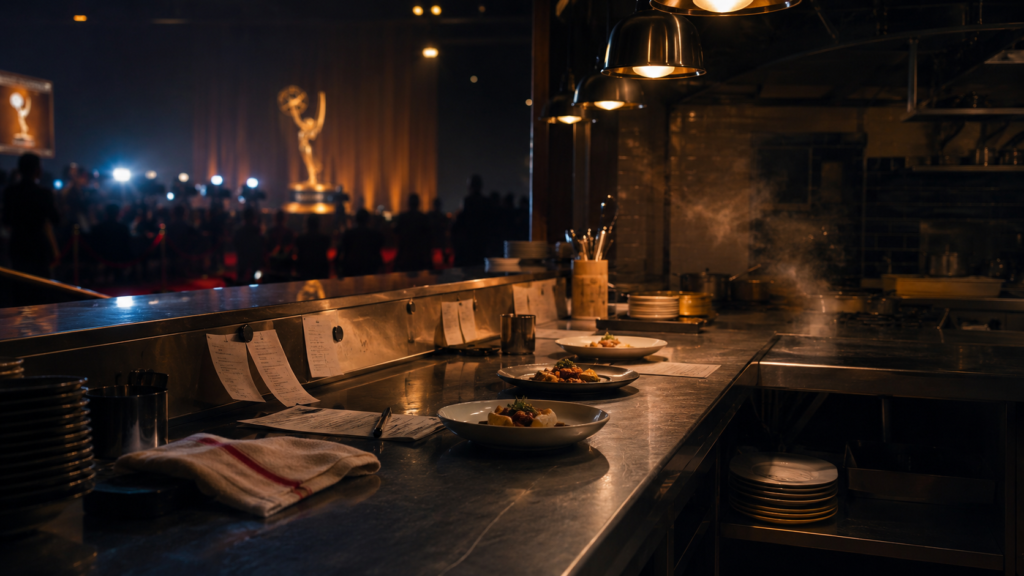
As The Bear prepares to air its fifth and final season on June 25, 2026, on FX with a simultaneous broadcast debut, the acclaimed TV show is generating some of the most intense discussion the television industry has seen in years. Fans are debating its legacy, critics are analyzing its final episodes, and early awards-season conversations are already underway. For anyone who cares about TV shows and the creative forces that shape them, this is a moment worth paying attention to.
Why The Bear Finale Is Driving TV Shows Conversation
Few TV shows in recent memory have had a trajectory quite like The Bear. Created by Christopher Storer, the FX drama-comedy launched in 2022 to near-universal critical acclaim, earning a perfect 100% rating from critics on Rotten Tomatoes for its first season, according to the review aggregator.
The show follows Carmen “Carmy” Berzatto, played by Jeremy Allen White, as he inherits his late brother’s Chicago sandwich shop and attempts to transform it into a world-class restaurant. Its documentary-style intensity, rapid-fire editing, and emotionally raw performances set it apart from most other TV shows of its era.
By its second season, The Bear had become the most-nominated comedy series in Emmy history, earning 23 nominations, surpassing the previous record held by 30 Rock, and winning 11 awards. Stars Jeremy Allen White, Liza Colón-Zayas, and director Christopher Storer all took home Emmy trophies at the 76th Primetime Emmy Awards.
Now, with its final season confirmed to consist of eight episodes and airing this week, the show is closing a chapter that began with thunderous acclaim. The question on every fan and critic’s mind: can The Bear go out on top?

Final Seasons Still Create Major Fan Interest
There is something about a final season that amplifies everything. For TV shows that have built loyal audiences over multiple years, a series finale carries emotional weight that few other entertainment events can match. When a story ends, viewers are forced to assess everything they watched, debate the choices made, and determine whether the conclusion honored the journey.
The Bear’s path to its final season has been far from simple. After its record-breaking second season, the show’s third installment received a more divided response from audiences, and at the 2025 Emmy Awards, covering Season 3, the series won zero awards after 13 nominations. That outcome marked one of the biggest single-year drops in Emmy history for any series, as noted by multiple entertainment publications.
Season 4 arrived in June 2025 and showed improvement in critical reception, according to available reviews, though the series remained a subject of intense debate about its genre classification. The ongoing question is whether The Bear genuinely qualifies as a comedy. has followed the show throughout its awards history.

Despite these complexities, the renewal for a fifth and final season in July 2025 was widely welcomed. Audiences still care deeply about the characters, the story, and how it all ends. That emotional investment is precisely what makes TV finales such powerful cultural events.
The Cultural Weight of a TV Finale
When popular TV shows air their final episodes, they often become focal points for broader cultural conversations. Viewers who may have drifted away from a series often return for a finale. Critics revisit the entire run. Social media fills with reaction threads, theories, and retrospectives.
The Bear’s finale follows this same pattern. With a standalone special episode. titled Gary, released as a surprise on May 5, 2026, featuring Ebon Moss-Bachrach and Jon Bernthal, the production team has been carefully building anticipation. According to The Hollywood Reporter, early episodes of Season 5 suggest the final season opens with a single, high-stakes day at the restaurant, with the fate of The Bear and its staff hanging in the balance.
How The Bear Connects to the Awards Race
In the world of prestige TV shows, the Emmy Awards remain the most important annual recognition. Even for a show that experienced an awards setback in 2025, a powerful final season can reshape how the Television Academy views a body of work.
The Bear has accumulated 21 Primetime Emmy Awards across its run, according to the Television Academy. That tally places it among the most decorated dramas-turned-comedies in recent Emmy history. With a final season that reviews describe as emotionally resonant and technically accomplished, the show enters the 2026 Emmy cycle with a compelling case.
According to the Television Academy’s submissions page, the show has already received recognition ahead of the Emmy nominations announcement. The awards classification question, comedy or drama, remains unresolved and will likely be a point of discussion again this cycle.
Industry observers have noted that final seasons often receive favorable treatment from awards voters. When voters know they are seeing the last work from a beloved cast and creative team, sentiment can play a meaningful role alongside critical assessment.
Why Emmy Buzz Matters for TV Shows
For TV shows, Emmy recognition does far more than fill a shelf with trophies. Awards buzz keeps a series in the public conversation long after its episodes have aired. It drives new viewers to discover older seasons. It validates the work of writers, directors, cinematographers, costume designers, and the dozens of other professionals who rarely receive public attention.
For actors, an Emmy nomination, and especially a win, can redefine a career. Jeremy Allen White’s Emmy wins for The Bear elevated his profile significantly. Liza Colón-Zayas, who won Outstanding Supporting Actress for her role as Tina, became a widely recognized name. Ayo Edebiri’s nomination for directing, in addition to her acting nomination, signaled her as a multifaceted talent to watch.
For studios and networks, Emmy recognition is a powerful marketing and investment tool. A show with a strong awards history attracts premium talent and signals that the platform takes creative risk seriously. FX’s consistent investment in The Bear reflects a strategy built around prestige TV storytelling.
The Genre Debate That Defines an Era
One of the most interesting subplots in The Bear’s awards history is the ongoing debate about its genre. The show airs in half-hour episodes, which traditionally places it in the comedy category under Emmy rules. But its relentlessly tense tone, heavy emotional content, and dramatic storytelling have led many critics and viewers to argue it belongs in drama.
This classification debate is not just about The Bear. It reflects a broader shift in television where genre boundaries have blurred significantly. TV shows today resist easy categorization, and the Emmy system, designed in a different era of television, is struggling to adapt. How the Television Academy handles this question for The Bear’s final season may have implications for future TV shows navigating the same challenge.
What This Means for Fans, Actors, and Studios
For fans, the final season of The Bear represents closure. The characters, Carmy, Sydney, Richie, Marcus, Tina, and the rest of the team, have become part of pop culture. Watching how their stories conclude is an emotional experience that extends beyond entertainment.
For the cast, a strong final season creates a lasting legacy. Actors like Jeremy Allen White, Ayo Edebiri, and Ebon Moss-Bachrach have careers that will be shaped significantly by their association with this show. A celebrated finale reinforces that association in the best possible way.
For FX and its parent company, a successful conclusion validates years of investment. It also sets a precedent for how the network approaches future prestige TV shows, demonstrating that creative ambition, critical support, and audience loyalty can coexist even under complex industry circumstances.
For writers, directors, and showrunners across the industry, The Bear’s journey offers important lessons. It shows that original, non-adaptation storytelling can break records. It also illustrates the risks and rewards of creative risk-taking in a television landscape where audience tastes shift quickly, and awards cycles can be unpredictable.
Why TV Finales Still Matter in a Crowded Entertainment World
It would be easy to assume that in an era of fragmented attention, where audiences can choose from hundreds of TV shows, films, podcasts, and social media channels, the idea of a single finale as a cultural moment has diminished. The evidence suggests otherwise.
Major TV finales continue to generate significant cultural conversation precisely because they are rare. In a world of infinite content, a series that has earned genuine audience loyalty becomes a shared experience that feels meaningful. When that series reaches its end, the conversation it generates is one of the few entertainment moments that genuinely brings large, diverse groups of viewers together.
The Bear’s final season is a reminder that TV shows, not just streaming catalogs or franchise universes, but individual, character-driven stories, still have the power to matter deeply. The prestige TV era that The Bear helped define has produced some of the most creatively ambitious work in the history of the medium. As this chapter closes, it does so with the weight of that achievement behind it.
For anyone invested in the future of television, the reception of The Bear’s final season is worth watching. It will tell us something important about what audiences still value, what awards voters prioritize, and where prestige TV goes next.
Fresh Global News Analysis
Final seasons carry a weight that no other television event can replicate. When a show ends, it forces a full accounting: Was the story worth telling? Did the characters grow? Did the creative team honor what came before? These questions turn a TV finale from a programming event into a cultural milestone.
The Bear’s position heading into its final season is unusual. It arrives having experienced both the heights of Emmy dominance and the turbulence of a shutout. That arc, from record-breaking to zero wins, makes the finale a narrative in itself, separate from anything that happens on screen.
Awards buzz serves a practical function for TV shows beyond simple recognition. When critics and industry insiders debate a show’s Emmy chances, they keep it in editorial conversations. Entertainment websites, newspapers, and broadcast coverage all follow the awards narrative. For The Bear, Emmy discussion in the weeks following its finale could generate sustained visibility during a summer period when entertainment competition is intense.
Prestige shows like The Bear also matter to the broader entertainment brand ecosystem. Networks and studios that consistently back quality TV shows build reputational equity with creative talent. Writers, directors, and actors who could work anywhere are drawn to platforms known for serious storytelling. The Bear’s success, even with its awards volatility, has almost certainly strengthened FX’s ability to attract the next generation of premium projects.
Finally, in a market where audience attention is genuinely fragmented, a TV show’s ability to generate passionate conversation, positive, negative, or somewhere in between, is itself a form of success. The Bear has never been a passive viewing experience. It demands full attention, emotional investment, and repeated discussion. That quality is rare, and it is what separates prestige TV from content that simply fills time.
Key Takeaways
- The Bear’s fifth and final season premiered June 25, 2026, on FX, with simultaneous broadcast, a first for a returning FX on Hulu series.
- The show has won 21 Primetime Emmy Awards across its run, per the Television Academy, making it one of the most decorated prestige TV shows in recent history.
- After a record-breaking second season and an Emmy shutout for its third season in 2025, the final season arrives at a pivotal moment for the show’s legacy.
- Early critic reviews describe Season 5 as emotionally resonant and narratively satisfying, positioning it well for the next Emmy cycle.
- The ongoing debate over The Bear’s comedy classification reflects a broader shift in how TV shows and awards bodies define genre in the modern era.
- TV finales remain powerful cultural events: they consolidate fan loyalty, generate media conversation, and often influence an entire network or studio’s creative reputation.
Frequently Asked Questions
Q1. Why is The Bear finale getting so much attention?
The Bear has been one of the most acclaimed and debated TV shows of the past several years. With a record Emmy history, a passionate fanbase, and strong early reviews for its final season, the finale is generating natural cultural conversation about endings, legacy, and what the show ultimately achieved.
Q2. Why do final seasons matter so much for TV shows?
Final seasons give audiences closure and allow creative teams to resolve the stories and characters they have built. For viewers who have invested years in a show, a finale is the payoff for that commitment. It also prompts a full reassessment of the entire series, which often elevates cultural appreciation.
Q3. How does The Bear connect to the awards race?
The Bear has a long history with the Emmy Awards, having set records for nominations and wins during its first two seasons. Its final season, with favorable early reviews, places it in a strong position for Emmy consideration in 2026. How the Television Academy classifies it (comedy vs. drama) may be the decisive factor.
Q4. What are the Emmy Awards?
The Emmy Awards are the television industry’s most prestigious honors, presented annually by the Television Academy. They recognize outstanding achievement across all areas of TV production, including acting, writing, directing, and technical categories. The Primetime Emmy Awards specifically cover network and premium cable TV shows.
Q5. Why do TV finales create so much fan buzz?
Finales are rare events. Unlike regular-season premieres or mid-season episodes, a series finale marks the permanent end of a story. That permanence amplifies emotional investment and encourages fans to discuss, debate, and reflect on everything the show meant to them.
Q6. What does this trend mean for the future of TV shows?
The intense attention around The Bear’s finale suggests that prestige TV storytelling still commands genuine cultural importance. As entertainment options multiply, shows that build deep audience loyalty through strong characters and writing will continue to generate meaningful moments, whether at the Emmy Awards or in everyday fan conversation.