


The Strait of Hormuz is a narrow waterway that connects the oil-rich Persian Gulf to the open ocean, and it’s suddenly back in the headlines. Tensions between the United States and Iran flared again this week after President Trump said a ceasefire deal was “over,” and oil prices jumped as a result, according to AP and CNBC reporting. If you’re hearing about the Strait now, it’s because renewed fighting near this waterway has investors worried about oil supply, gas prices, and the broader economy.
Key Points
- The Strait of Hormuz connects the Persian Gulf to open ocean shipping routes.
- It is one of the world’s most important oil and LNG shipping chokepoints.
- Iran sits on the northern side of the strait.
- Any disruption there can affect oil prices and shipping costs.
- Whether gas prices actually rise depends on whether tanker traffic is genuinely disrupted, not just on rising tensions.
What Is the Strait of Hormuz?
The Strait of Hormuz is a narrow sea passage that links the Persian Gulf with the Gulf of Oman and, beyond that, the wider ocean. It is one of the busiest and most closely watched shipping lanes on the planet. Tankers carrying crude oil and liquefied natural gas (LNG) pass through it daily on their way from Gulf producers to buyers around the world.
Where Is the Strait of Hormuz Located?
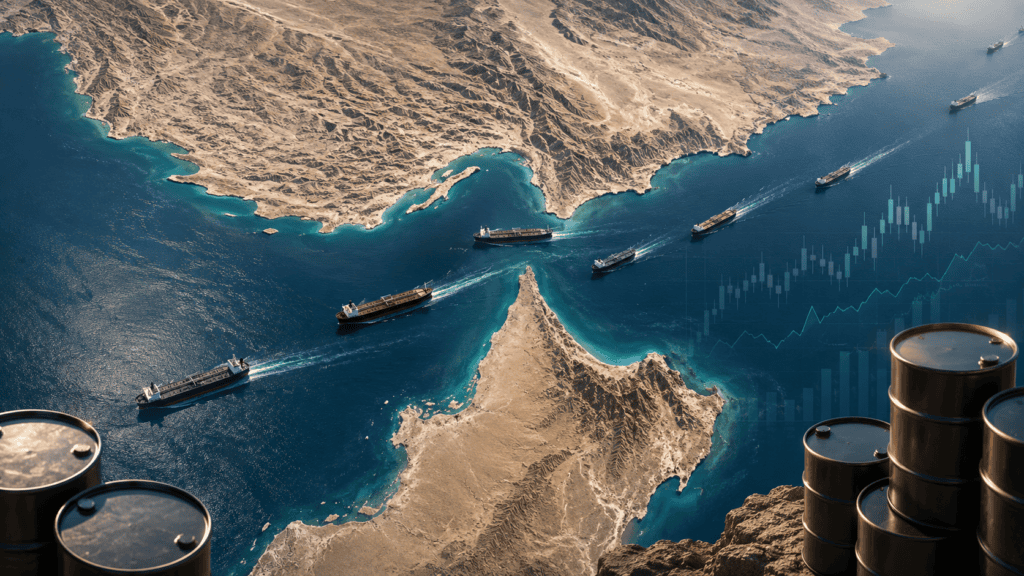
The Strait of Hormuz sits between Iran to the north and Oman to the south, at the mouth of the Persian Gulf. At its narrowest point, the shipping channel is only a few miles wide, which is part of why it is considered so easy to disrupt. Ships heading to or from major oil-exporting nations like Saudi Arabia, the UAE, Kuwait, and Qatar have no way around it.
Why Is the Strait of Hormuz Important for Oil Prices?
The Strait of Hormuz is important for oil prices because a huge share of the world’s seaborne oil and gas passes through it every day. Industry estimates commonly cited by the U.S. Energy Information Administration put the figure at around one-fifth of global oil and LNG supply moving through the strait in normal times. Before the current conflict, roughly 120 to 140 vessels crossed the strait each day, about half of them oil tankers, according to shipping-data firm Kpler.
Because so much energy trade flows through this one narrow passage, any real threat to shipping there tends to move oil markets almost immediately.
How Could Iran Tensions Affect the Strait of Hormuz?
Iran tensions could affect the Strait of Hormuz because Iran controls the strait’s entire northern coastline and has repeatedly used that position as leverage during conflicts. Since a wider U.S.-Israel-Iran conflict began in February 2026, Iranian forces have at times restricted or attacked shipping through the waterway, and tanker traffic collapsed to as few as two ships a day at the height of the fighting, according to Al Jazeera’s review of Kpler shipping data.
A ceasefire and a memorandum of understanding signed in mid-June briefly eased the situation. But on July 6 and 7, Iran attacked three commercial ships transiting the strait, according to the U.S. military, and President Trump said afterward at a NATO summit that he considered the ceasefire over, according to AP.
Could a Strait of Hormuz Disruption Raise Gas Prices?
A Strait of Hormuz disruption could raise gas prices, but only if tanker traffic through the waterway is actually reduced in a sustained way. Oil markets react quickly to the threat of disruption, and prices already moved sharply this week: U.S. crude settled at $73.52 a barrel, up 4.4%, while international benchmark Brent settled at $78.02, up 5.2%, according to AP and CNBC.
That said, higher crude prices don’t automatically mean higher prices at the pump right away. It generally takes real, extended disruption to shipping volumes, not just rising tension, for those costs to fully work their way through to gas prices for consumers.
What Should Readers Watch Next?
Readers should watch three things closely in the days ahead: tanker traffic through the Strait of Hormuz, oil price movements, and the state of U.S.-Iran negotiations. Shipping-tracking data from firms like Kpler offers a real-time read on whether tankers are actually avoiding the strait or continuing to transit it.
Oil prices are likely to stay volatile as long as the ceasefire’s status remains unclear. Any further attacks on tankers, renewed U.S. strikes, or an Iranian move to formally close the strait would be the clearest signals that disruption is worsening rather than easing.
Frequently Asked Questions
Q1. What is the Strait of Hormuz?
It’s a narrow shipping channel connecting the Persian Gulf to the open ocean, used daily by oil and gas tankers.
Q2. Why is the Strait of Hormuz important?
It’s one of the world’s busiest energy shipping routes, carrying a large share of global oil and LNG exports.
Q3. How much oil passes through the Strait of Hormuz?
In normal times, roughly a fifth of the world’s oil and LNG supply moves through the strait, based on figures widely cited by the U.S. Energy Information Administration.
Q4. Can Iran close the Strait of Hormuz?
Iran has restricted and attacked shipping there before, and traffic has dropped sharply during past conflicts, though a full, lasting closure would be difficult given international naval presence in the region.
Q5. Will gas prices rise if the Strait of Hormuz is disrupted?
Gas prices could rise if shipping is meaningfully and consistently disrupted, but a temporary spike in tension alone does not guarantee higher prices at the pump.
Conclusion
The Strait of Hormuz has become a flashpoint again as U.S.-Iran tensions resurface after a brief ceasefire. Whether this leads to lasting higher oil and gas prices depends on what happens next, not on the headlines alone. Readers should keep an eye on tanker traffic data, daily oil price moves, and any new developments in Iran-related negotiations or strikes.