



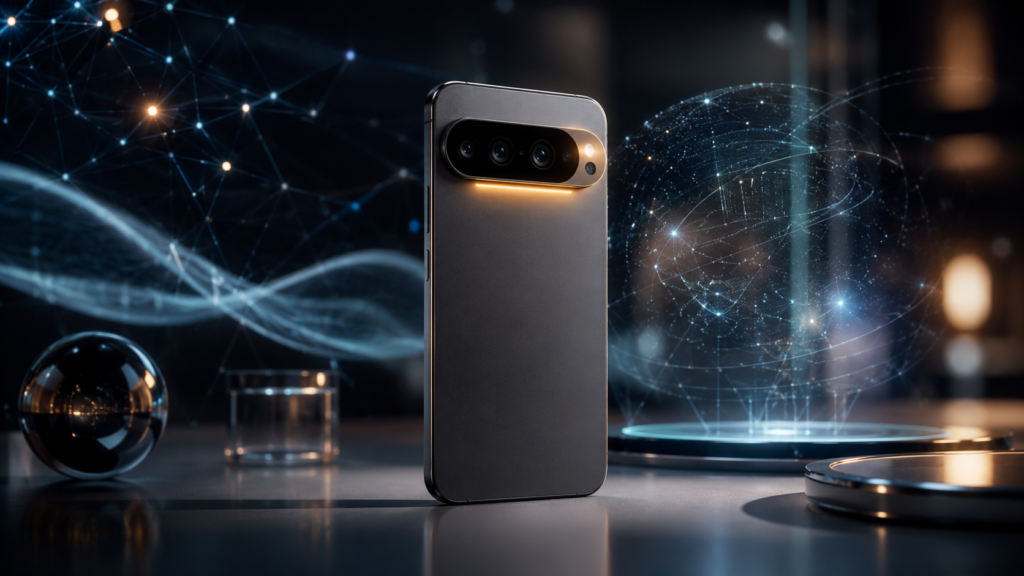
Google is taking its next big step into AI-powered smartphones with the Pixel 11 series. With the new generation arriving on August 12, 2026, the Pixel 11 Pro is drawing attention not only for its cameras and hardware, but also for how deeply Google could integrate artificial intelligence into everyday smartphone use.
Google has already positioned Pixel as a phone built around Google AI and Gemini. Existing Pixel features include AI-powered photo editing, Gemini assistance, Circle to Search, Camera Coach, Voice Translate and tools that can work across multiple Google apps.
For the Pixel 11 Pro, the biggest question is whether Google can turn those AI capabilities into genuinely useful everyday tools rather than simply adding more AI features to a smartphone.
Here is what consumers should know about the Pixel 11 Pro, its expected AI capabilities and the technology behind Google’s next flagship.
Why AI Is the Big Pixel 11 Pro Story
AI has quickly become one of the defining features of modern smartphones.
AI now powers features across cameras, search, messaging, translation, photo editing and productivity tools instead of remaining confined to a separate chatbot app.
Google has a particular advantage in this area because it develops Android, operates Gemini and designs Pixel hardware.
That allows Google to connect its AI software more closely with the phone itself.
The Pixel 11 Pro is therefore interesting because its AI story is not just about asking Gemini questions. The bigger goal is to make AI part of how the phone understands images, conversations, apps and everyday tasks.
Google’s current Pixel AI ecosystem already lets Gemini help users across apps, understand on-screen content and perform certain tasks from a single prompt.
For people interested in how technology is changing everyday computing, this broader AI integration could become more important than traditional specification upgrades.
Tensor G6 Could Power the Next Generation of Pixel AI
One of the biggest expected hardware changes is Google’s next-generation Tensor G6 processor.
Google designed the Tensor family around its AI-focused approach. Rather than competing only on raw benchmark performance, Google uses its custom chips to handle machine-learning workloads and power features that help distinguish Pixel phones.
Pre-launch reports point to Tensor G6 as the processor for the Pixel 11 series. Some reports also suggest that Google may use a more advanced manufacturing process to improve efficiency and performance, although readers should treat detailed technical specifications cautiously until Google confirms them officially.
For users, the important question is not simply whether Tensor G6 is faster.
The bigger question is whether it can make AI tasks faster, more responsive and less demanding on battery life.
A more efficient AI processor could help smartphones perform computational photography, voice processing and other machine-learning tasks without depending as heavily on cloud processing.
Gemini Could Become More Deeply Integrated
Gemini is already one of the most important parts of Google’s Pixel strategy.
Google describes Gemini as a built-in AI assistant that can help users find information, work with content on their screen, plan tasks and interact with Google apps.
On current Pixel devices, Gemini can also use camera and screen-sharing capabilities through Gemini Live, allowing users to show the AI what they are seeing and ask questions about it.
The Pixel 11 Pro is expected to build on this direction.
That could make the phone feel less like a collection of separate apps and more like a single AI-assisted environment.
For example, instead of opening one application to find information, another to write something and another to organize it, users could increasingly ask Gemini to help connect those tasks.
Google already demonstrates this type of cross-app capability, including asking Gemini to find information across Google services and take actions based on a user’s request.
AI Camera Features Could Be One of the Biggest Upgrades
Google Pixel phones use computational photography, combining camera hardware with software and machine learning to produce the final image.
This makes AI particularly important for Pixel photography.
Google currently uses AI for features such as Magic Eraser, Best Take, Add Me, Camera Coach and AI-powered photo editing. Camera Coach, for example, can use Gemini capabilities to help users find better lighting, scenes and angles.
The Pixel 11 Pro is expected to continue this approach.
Leaked marketing material has reportedly pointed toward a 120x zoom capability for the Pro models, alongside Gemini-powered AI features. However, this should be treated as leaked information until Google confirms the final specifications.
A higher zoom number alone does not guarantee better photographs.
At extreme magnification, computational photography becomes increasingly important because the phone has to combine camera information with software processing to produce a usable image.
If Google’s reported 120x zoom performs well in real-world conditions, it could become one of the Pixel 11 Pro’s most talked-about camera features.
Pixel 11 Pro and the Reported Pixel Glow Feature
Another unusual feature associated with the Pixel 11 generation is a rear-facing LED system reportedly called Pixel Glow or HiLight.
Google itself teased the new Pixel Glow array on its Pixel 11 landing page before launch, giving the feature more credibility than a typical anonymous leak. Android Authority also reported that Google’s Store teaser showed an animated RGB LED array on the back of the upcoming phone.
Reports suggest the system could be used for visual notifications and potentially other interactions.
Some leaked software evidence has reportedly suggested color-coded alerts connected to selected contacts, although consumers should wait for Google’s official explanation before assuming exactly how the feature will work.
If Google uses the system for more than decorative lighting, it could become an interesting example of how smartphone hardware and AI can work together.
Imagine receiving a subtle visual signal without immediately picking up the phone and turning on the display.
That kind of ambient interaction could become part of the next generation of smartphone design.
Will AI Run Directly on the Phone?
One of the most important questions surrounding AI smartphones is where the processing happens.
Some AI tasks can run directly on the device, while more demanding tasks may rely on cloud-based systems.
On-device AI can potentially offer advantages in speed, privacy and offline functionality. It also reduces the need to send every request to a remote server.
Google’s Pixel platform already emphasizes AI capabilities built into the phone. Its current Pixel AI ecosystem includes features ranging from on-device assistance to Gemini-powered services.
For Pixel 11 Pro buyers, this means the most useful specifications may not be the ones printed on the phone’s box.
Instead, consumers should pay attention to which AI features work locally, which require an internet connection and how Google handles personal information.
That could become increasingly important as AI gains access to more contextual information.
What Makes Pixel 11 Pro Different From a Normal AI Phone?
Almost every premium smartphone now advertises AI features.
So simply calling a device an “AI phone” is no longer enough.
The difference comes down to integration.
Google’s approach combines the phone’s camera, Android software, Gemini, Google Search, Google Photos and other services.
The company’s existing Pixel AI features show how this ecosystem can work together. Users can search what they see, edit images using natural-language instructions, use Gemini across apps and receive AI assistance during calls.
The Pixel 11 Pro could take this concept further.
Instead of opening an AI app when you need help, the phone could increasingly make AI available where the task is already happening.
That is a more meaningful definition of an AI-powered smartphone.
Pixel 11 Pro vs. Pixel 10 Pro: Will the AI Upgrade Matter?
For current Pixel 10 Pro owners, the decision may be more complicated.
The Pixel 10 generation already provides a strong AI experience, so the Pixel 11 Pro needs to deliver more than a new processor and a handful of additional AI tools to make upgrading worthwhile.
For someone using an older Pixel model, however, the difference could be much more noticeable.
A newer generation can bring improvements across AI processing, cameras, software support and overall performance at the same time.
Consumers who are already interested in upgrading their tech setup may also want to explore other modern tech accessories that complement a smartphone-based workflow, such as the compact mechanical keyboards covered in our NuPhy keyboards review.
For people building a broader technology setup, LaptopsGeekPro’s Home & Tech collection also covers gadgets and technology products beyond smartphones.
What About the Pixel 11 Pro’s Camera Hardware?
AI cannot completely replace good camera hardware.
A strong smartphone camera still depends on sensors, lenses, stabilization and image processing.
Google’s strategy has traditionally been to combine those hardware components with advanced computational photography.
That means the Pixel 11 Pro’s real-world camera performance will depend on how well Google’s software combines information from the camera sensors with AI processing.
The reported 120x zoom is therefore interesting, but reviewers will need to test how much detail remains at high magnification, particularly in low-light conditions.
For consumers who use their phone for photography, this practical performance will matter more than a headline specification.
What Google Has Confirmed vs. What Is Still Reported?
This is an important distinction for anyone researching the Pixel 11 Pro before buying.
Google has officially promoted the Pixel 11 launch for August 12, including pre-order information through the Google Store. The company has also highlighted its broader Pixel AI ecosystem, including Gemini, AI photography, Circle to Search and other AI-powered tools. In addition, materials on the Google Store have teased the Pixel Glow array.
Leaks and technology publications have reported other details, including specific Tensor G6 specifications, 120x zoom implementation and some HiLight functionality. These details should be treated as reported features until Google provides official confirmation.
That distinction is important because leaked specifications can change, and early reports do not always describe the final consumer experience accurately.
Should You Wait for the Pixel 11 Pro?
For Americans shopping for a premium Android phone in 2026, the Pixel 11 Pro is worth watching closely.
Its biggest attraction may not be a single feature.
Instead, it is the combination of Google’s AI ecosystem, Gemini, computational photography, custom Tensor hardware and the company’s growing focus on making AI part of everyday smartphone interactions.
If you are using an older Pixel or another aging Android phone, the overall upgrade could be significant.
Pixel 10 Pro owners may have a harder decision because their current phones already offer extensive AI functionality.
The final decision should therefore depend on real-world improvements in battery life, camera performance, AI usefulness, software features and pricing, not simply the number of AI features Google announces.
The Bottom Line
The Google Pixel 11 Pro represents an important moment in the evolution of AI smartphones.
Google is not simply adding a chatbot to another flagship phone. It is building a broader ecosystem in which Gemini, cameras, search, photos and everyday smartphone tasks can work together.
Google expects the next generation of Tensor hardware to support that strategy, while its existing Pixel AI features show how deeply the company wants to integrate Gemini into the phone experience.
The reported 120x zoom and Pixel Glow system could add another layer of differentiation, although some of the details surrounding those features remain based on leaks and should be verified against Google’s final specifications.
Ultimately, the most important question is not whether the Pixel 11 Pro has more AI.
It is whether that AI actually makes the phone more useful, more intuitive and easier to use every day.
That is what will determine whether Google’s next Pro Pixel is simply another flagship smartphone, or a meaningful step toward the next generation of personal computing.
Frequently Asked Questions
Q1. What is the Google Pixel 11 Pro?
The Google Pixel 11 Pro is Google’s next-generation Pro flagship smartphone, designed around Google’s Pixel software, camera technology and growing Gemini AI ecosystem.
Q2. What AI features will the Pixel 11 Pro have?
The Pixel 11 Pro is expected to build on Google’s Gemini-powered Pixel experience, including AI assistance, computational photography and other contextual smartphone features. Some individual features reported before launch remain subject to official confirmation.
Q3. What is Tensor G6?
Google expects Tensor G6 to power the Pixel 11 family. The company designs its Tensor chips to support Pixel’s machine-learning and AI capabilities.
Q4. Will the Pixel 11 Pro have 120x zoom?
Leaked marketing material has reportedly shown a 120x zoom capability for the Pixel 11 Pro. The exact implementation and real-world performance should be confirmed through Google’s official specifications and independent reviews.
Q5. What is Pixel Glow?
Pixel Glow is the name being used in reports for a new rear-facing LED array associated with the Pixel 11 series. Google has teased the feature through its Store materials, while additional functionality has been reported by technology publications.
Q6. Is the Pixel 11 Pro worth upgrading to?
That depends on your current phone. People using older smartphones may see a larger overall improvement, while Pixel 10 Pro owners may want to compare the final AI, camera, battery and performance improvements before upgrading.
Editorial Note
This article distinguishes between Google’s published information and features reported through leaks. Specifications or features that had not been officially confirmed at the time of research are described as expected, reported or leaked rather than presented as confirmed facts.