



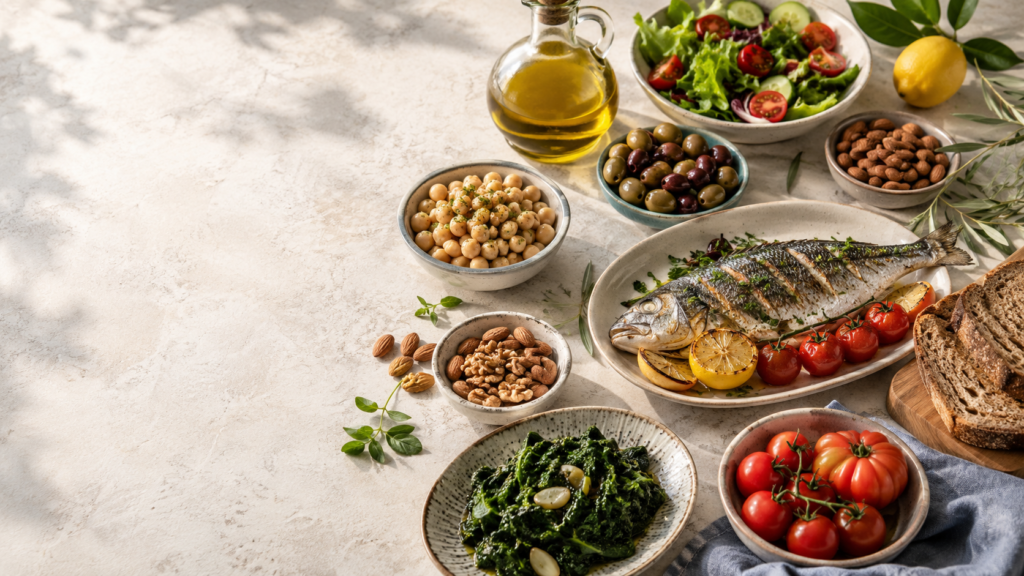
In a world crowded with trending diets, keto, carnivore, and intermittent fasting, one eating pattern has quietly held its ground for decades. The Mediterranean diet, built around the traditional foods of southern European coastal communities, continues to earn the endorsement of leading nutrition scientists, cardiologists, and public health organizations worldwide.
This is not a rigid meal plan. Nor is it a weight-loss programme with a countdown. Instead, researchers and clinicians describe it as one of the most sustainable, evidence-backed, and health-promoting ways to eat for the long term.
This article examines what the Mediterranean diet actually is, why the scientific and clinical community continues to recommend it, what foods it includes, how it compares with newer dietary trends, and what readers should consider before adopting it.
What Is the Mediterranean Diet?
The Mediterranean diet is not a single, standardised eating plan. It is a broad dietary pattern inspired by the traditional eating habits of countries bordering the Mediterranean Sea, including Greece, Italy, Spain, and parts of the Middle East and North Africa.
The pattern was formally studied and documented in the 1960s following the landmark Seven Countries Study, one of the earliest large-scale examinations of the relationship between diet, lifestyle, and cardiovascular disease. Researchers found that populations in Mediterranean regions had significantly lower rates of heart disease than those in northern Europe or the United States, despite consuming relatively high levels of fat.

The key difference, scientists noted, was the type of fa, primarily unsaturated fats from olive oil, fish, and nuts, and the abundance of whole plant foods in the diet.
Core Characteristics
At its foundation, the Mediterranean diet is defined by the following characteristics:
- High consumption of fruits and vegetables, whole grains, legumes, and nuts
- Olive oil is the primary added fat
- Moderate consumption of fish and seafood, especially oily fish rich in omega-3 fatty acids
- Moderate consumption of poultry, eggs, and dairy
- Limited consumption of red and processed meat
- Limited consumption of added sugars and ultra-processed foods
- Moderate, optional consumption of red wine with meals (not a required feature)
- A strong emphasis on seasonal, locally sourced, and minimally processed ingredients
Importantly, the Mediterranean diet is also associated with a lifestyle context: shared meals, physical activity, and an unhurried approach to eating. Public health experts note that these social and behavioural dimensions are part of what makes the pattern effective and sustainable.
Mediterranean Diet Foods List
The following table summarises the key food categories and their typical frequency within the Mediterranean dietary pattern.
| Food Category | Examples | Frequency |
| Vegetables | Tomatoes, leafy greens, courgette, peppers, aubergine | Every meal |
| Fruits | Oranges, grapes, figs, berries, melons, pomegranates | Daily |
| Whole Grains | Wholemeal bread, oats, bulgur, brown rice, farro | Daily |
| Legumes | Lentils, chickpeas, cannellini beans, broad beans | Several times/week |
| Nuts & Seeds | Almonds, walnuts, pistachios, sesame, sunflower seeds | Daily in moderation |
| Olive Oil | Extra-virgin olive oil (cold-pressed) | Primary cooking fat |
| Fish & Seafood | Salmon, sardines, mackerel, tuna, sea bass, prawns | 2+ times/week |
| Poultry & Eggs | Chicken, turkey, eggs | Moderate, a few times/week |
| Dairy | Greek yoghurt, feta, parmesan (in moderation) | Moderate |
| Red Meat | Lamb, beef, pork | Occasional (limited) |
| Added Sugars & Sweets | Pastries, confectionery, sweetened drinks | Rarely / minimal |
| Ultra-Processed Foods | Fast food, packaged snacks, ready meals | Avoid or minimise |
Why Experts Still Recommend the Mediterranean Die
What distinguishes the Mediterranean diet from many other popular eating plans is the volume and consistency of scientific research supporting it. Over several decades, hundreds of peer-reviewed studies have examined its effects on a wide range of health outcomes.
No eating plan is universally perfect, and nutrition science continues to evolve. However, the Mediterranean diet consistently ranks among the top dietary patterns in independent research reviews and clinical guidelines, not because of marketing, but because of evidence.
Cardiovascular Health
The most well-established area of research relates to heart health. A landmark clinical trial, the PREDIMED study (Prevención con Dieta Mediterránea), conducted in Spain, followed thousands of adults at high cardiovascular risk over a number of years. Participants assigned to a Mediterranean diet supplemented with extra-virgin olive oil or mixed nuts showed a significantly reduced risk of major cardiovascular events compared to those following a low-fat diet.
The American Heart Association and numerous European cardiology bodies cite the Mediterranean diet as a heart-healthy dietary pattern, particularly for its role in managing LDL cholesterol, blood pressure, and arterial inflammation.
Olive oil, a central component, is rich in oleocanthal and oleic acid, compounds studied for their anti-inflammatory properties. Oily fish provide EPA and DHA, forms of omega-3 fatty acids associated with reduced cardiovascular risk.
Note: The Mediterranean diet is not a treatment or cure for heart disease. Anyone with an existing cardiovascular condition should discuss dietary changes with their cardiologist or healthcare provider.
Metabolic Health and Weight Management
Research suggests that the Mediterranean diet supports healthy body weight, though it is not specifically designed as a calorie-restriction plan. Its high fibre content, from vegetables, legumes, and whole grains, supports satiety and helps regulate blood glucose levels.
Several observational studies and randomised trials have found associations between Mediterranean eating patterns and lower rates of type 2 diabetes, as well as improvements in blood sugar management in individuals already living with the condition.
Individuals with diabetes, insulin resistance, or metabolic syndrome should consult a registered dietitian before adopting any new eating plan, as individual carbohydrate tolerance, medication, and other factors must be considered.
Brain Health and Cognitive Function
A growing body of research explores the link between the Mediterranean diet and cognitive health in later life. Several prospective studies have found associations between adherence to the diet and a lower risk of cognitive decline, Alzheimer’s disease, and dementia.
The MIND diet, a hybrid of the Mediterranean and DASH (Dietary Approaches to Stop Hypertension) diets, was specifically designed to target brain health, and has shown promising results in research settings.
Researchers hypothesise that anti-inflammatory compounds in the diet, combined with its support for cardiovascular health (which is closely linked to brain blood flow), may partly explain these associations. However, the research is ongoing, and no direct causal conclusions should be drawn.
Anti-Inflammatory Properties
Chronic low-grade inflammation is recognised as a contributing factor to many non-communicable diseases, including type 2 diabetes, certain cancers, and cardiovascular disease. The Mediterranean diet is rich in foods with anti-inflammatory properties,including polyphenol-rich olive oil, carotenoid-rich vegetables, flavonoid-rich fruits, and omega-3-rich fish.
Some research suggests that biomarkers of inflammation, such as C-reactive protein (CRP) and interleukin-6, may be lower in individuals who follow a Mediterranean eating pattern. This area of research is active, and findings continue to develop.
Longevity
The concept of Blue Zones, geographic regions with unusually high concentrations of people living past 90 and 100, has brought further attention to the Mediterranean diet. Several Blue Zone regions, including Sardinia in Italy and Ikaria in Greece, are characterised by traditional Mediterranean eating patterns combined with active lifestyles and strong social connections.
While it is impossible to attribute longevity to diet alone, researchers consistently identify the Mediterranean dietary pattern as a common thread among long-lived populations.
Mediterranean Diet vs Modern Diet Trends
Despite its enduring scientific support, the Mediterranean diet must compete in a nutritional information landscape increasingly shaped by social media, influencer culture, and aggressive marketing from the wellness industry. How does it compare to current trends?
| Diet Trend | Key Features | Vs Mediterranean Diet |
| Ketogenic Diet | Very low carbohydrate, high fat, moderate protein | Med diet includes carbohydrates from whole grains and legumes; broader food variety |
| Carnivore Diet | Meat and animal products only; eliminates all plant foods | Mediterranean diet is plant-forward; limited clinical evidence for carnivore |
| Intermittent Fasting | Focuses on timing of eating; not food type | Can be combined with Mediterranean eating; different mechanism |
| Low-Fat Diet | Restricts total fat intake | Mediterranean diet includes healthy fats; research suggests this is beneficial |
| Paleo Diet | Based on presumed ancestral foods; eliminates dairy, grains | Mediterranean diet includes whole grains and dairy; broader food acceptance |
| Plant-Based / Vegan | Eliminates all animal products | Mediterranean diet is plant-forward but includes fish, dairy, and eggs |
The key advantage of the Mediterranean diet over many of these alternatives, according to nutrition researchers, is its breadth of long-term evidence, its dietary variety, its palatability, and its proven adherence over time. Many restrictive diets show short-term results but are difficult to sustain, a significant limitation in clinical nutrition.
How to Follow the Mediterranean Diet: Practical Guidance for Beginners
The Mediterranean diet is widely regarded as accessible and flexible; it does not require special foods, expensive supplements, or rigid meal timing. The following practical steps can serve as a starting point for those interested in adopting or exploring the pattern.
Key Practical Steps
- Switch to extra-virgin olive oil as your primary cooking and dressing fat
- Fill at least half your plate with vegetables and/or legumes at most meals
- Choose whole grain options, wholemeal bread, whole oats, brown rice, quinoa, or bulgur wheat
- Include fish or seafood two or more times per week; prioritise oily fish such as salmon, sardines, or mackerel
- Add a small handful of unsalted nuts or seeds as a daily snack
- Reduce red and processed meat to occasional portions, once or twice per week at most
- Limit added sugars, sugary drinks, and ultra-processed foods
- Eat fruit as a dessert or snack rather than reaching for confectionery
- Enjoy meals at a relaxed pace, ideally with others, when possible
- Stay physically active, the Mediterranean lifestyle is not sedentary
Key Takeaways
What the Evidence Shows
- The Mediterranean diet is one of the most thoroughly researched dietary patterns in the world
- Strong evidence supports its role in reducing cardiovascular risk and supporting metabolic health
- Growing evidence links it to cognitive health and longevity, though research is ongoing
- Its anti-inflammatory food profile, olive oil, fish, plant foods, is a distinguishing feature
- It is flexible, culturally diverse, and generally sustainable over the long term
- It is not a cure for disease and should not replace medical care or professional dietary guidance
- People with specific health conditions should consult a healthcare professional before making major dietary changes
What It Means: Expert Analysis
Nutritional science is not static. As new research emerges, dietary recommendations are refined. The Mediterranean diet has not escaped scrutiny, some researchers have raised questions about specific sub-populations, the role of individual foods versus the overall pattern, and the degree to which findings from Mediterranean populations translate to other cultural contexts.
However, several factors explain why it retains expert endorsement despite this scrutiny.
First, it is a dietary pattern, not a single food or nutrient. This makes it more resilient to the findings of individual studies, which tend to examine isolated compounds or food groups. Research consistently shows that overall dietary patterns are more predictive of health outcomes than individual nutrients in isolation.
Second, its foods, olive oil, whole grains, vegetables, legumes, fish, and nuts, have independent evidence bases supporting their role in health. The Mediterranean diet combines these in a way that nutrition science broadly supports.
Third, it is adaptable. The diet can be tailored to different cultural contexts, ingredient availability, budget levels, and personal preferences, making it more broadly applicable than many prescriptive dietary plans.
Fourth, its track record is unmatched. Few dietary patterns have been studied as extensively, in as many populations, over as many years. That consistency of evidence is rare in nutrition science.
Frequently Asked Questions
Q1: What is the Mediterranean diet?
The Mediterranean diet is a plant-forward eating pattern based on the traditional foods of countries bordering the Mediterranean Sea, particularly Greece, Italy, and Spain. It emphasises vegetables, fruits, whole grains, legumes, nuts, olive oil, and fish, while limiting red meat, added sugars, and ultra-processed foods.
Q2: Why do experts recommend the Mediterranean diet?
Experts recommend the Mediterranean diet primarily because of its extensive scientific evidence base. Decades of clinical trials and observational studies have linked it to reduced cardiovascular risk, better metabolic health, and associations with cognitive function and longevity. It also offers dietary variety, flexibility, and strong long-term adherence compared to more restrictive plans.
Q3: Is the Mediterranean diet healthy?
According to the current weight of nutritional evidence, yes, the Mediterranean diet is considered a healthful eating pattern. It is high in fibre, healthy fats, antioxidants, and micronutrients. However, ‘healthy’ always depends on individual context. People with specific medical conditions should seek professional dietary advice.
Q4: What are the main benefits of the Mediterranean diet for heart health?
Research, including major clinical trials such as the PREDIMED study, has found that the Mediterranean diet is associated with reduced risk of major cardiovascular events, including heart attack and stroke. Key contributing factors include the heart-healthy fats in olive oil and fish, the fibre from whole grains and legumes, and the anti-inflammatory properties of polyphenol-rich plant foods.
Q5: Can the Mediterranean diet help with weight management?
The Mediterranean diet is not a calorie-counting plan, but its high fibre and protein content, from legumes, fish, nuts, and vegetables, can support satiety and healthy weight management. Some research suggests it may be as effective as other dietary approaches for weight loss while being more sustainable. Individual results will vary, and any weight-management plan should consider overall energy intake and activity levels.
Q6: What foods are on the Mediterranean diet foods list?
Key foods include: extra-virgin olive oil, leafy greens, tomatoes, peppers, courgette, citrus fruits, berries, wholegrains (oats, bulgur, wholemeal bread), lentils, chickpeas, almonds, walnuts, salmon, sardines, mackerel, Greek yoghurt, and feta cheese. Red meat, sweets, and processed foods are limited.
Q7: How do I follow the Mediterranean diet as a beginner?
Start by replacing butter or refined oils with extra-virgin olive oil, adding more vegetables and legumes to meals, choosing whole grains over refined versions, and eating oily fish at least twice per week. Gradually reduce red meat and sugary foods. It is more of a gradual lifestyle shift than a strict protocol.
Q8: How does the Mediterranean diet compare to keto or other modern diets?
Unlike the ketogenic diet, which severely restricts carbohydrates, the Mediterranean diet includes carbohydrates from whole grains and legumes. Unlike the carnivore diet, it is strongly plant-forward. Compared to low-fat diets, it embraces healthy fats. It has a broader and more consistent long-term evidence base than most current dietary trends.