


Fiber-rich foods are getting renewed attention from nutrition experts as more research links dietary fiber to better digestion, steadier blood sugar, and long-term gut health. Yet many adults still fall short of daily fiber recommendations. This guide breaks down which fiber-rich foods matter most, why they support the gut, and how to add them to your diet safely and gradually.
What Are Fiber-Rich Foods?
Fiber-rich foods come from plants and contain high amounts of dietary fiber, a type of carbohydrate the body does not fully digest. Instead of breaking fiber down for energy like other carbohydrates, the digestive system moves it mostly intact and uses it to support several important functions.
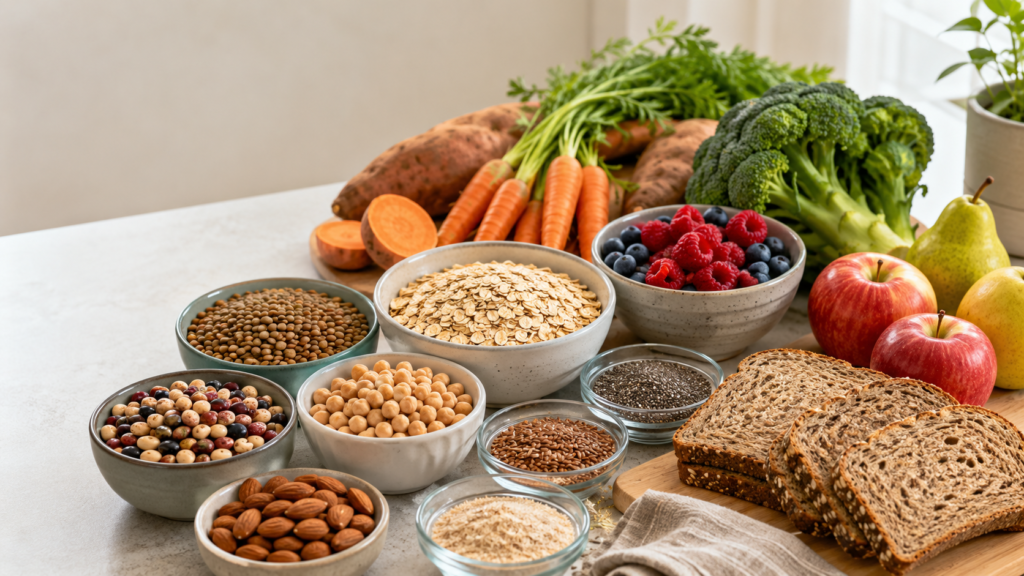
Common categories of fiber-rich foods include:
- Legumes (lentils, beans, chickpeas)
- Whole grains (oats, brown rice, whole wheat)
- Fruits (apples, berries, pears)
- Vegetables (broccoli, carrots, sweet potatoes)
- Nuts and seeds (chia seeds, flaxseeds, almonds)
- Fiber supplements such as psyllium husk
According to the Academy of Nutrition and Dietetics and Mayo Clinic, dietary fiber is generally divided into two main types: soluble and insoluble. Both types are naturally present in most plant foods, though in different proportions.
What it means: Choosing a variety of foods rich in fiber, rather than relying on a single source, helps ensure a more balanced mix of soluble and insoluble fiber in the diet.
Why Fiber Matters for Gut Health
Dietary fiber plays a central role in digestive health. Soluble fiber dissolves in water to form a gel-like substance that can help slow digestion, while insoluble fiber adds bulk to stool and helps material move through the intestines more efficiently.
Fiber also serves as a food source for beneficial bacteria in the gut microbiome. Harvard T.H. Chan School of Public Health notes that certain fibers, sometimes called prebiotic fibers, are fermented by gut bacteria, which may support a healthier balance of microorganisms in the digestive tract.
Beyond digestion, fiber intake has been associated with:
- Support for regular bowel movements
- Healthier cholesterol levels
- More stable blood sugar response after meals
- Longer-lasting feelings of fullness (satiety)
What it means: Fiber does not work in isolation. Its benefits are most noticeable as part of an overall balanced diet that also includes adequate protein, hydration, and physical activity.
Best Fiber-Rich Foods to Add to Your Diet
Below is a practical list of fiber rich foods, along with their primary fiber type and simple ways to include them in everyday meals.
| Food | Fiber Type | Why It Helps | Easy Way to Eat It |
| Lentils | Soluble & Insoluble | Supports digestion and steady blood sugar | Add to soups, curries, or salads |
| Beans (black, kidney) | Soluble & Insoluble | Adds bulk to stool, supports gut bacteria | Mix into rice bowls or tacos |
| Chickpeas | Soluble & Insoluble | Provides fiber and plant protein | Roast as a snack or blend into hummus |
| Oats | Soluble | May help support healthy cholesterol levels | Prepare as oatmeal or overnight oats |
| Chia seeds | Soluble | Forms a gel that supports regularity | Sprinkle on yogurt or make chia pudding |
| Flaxseeds | Soluble & Insoluble | Supports digestion; best ground for absorption | Add ground flax to smoothies or oatmeal |
| Apples | Soluble & Insoluble | Skin provides insoluble fiber, pectin is soluble | Eat whole with the skin on |
| Berries | Soluble & Insoluble | High fiber with fewer calories than many fruits | Add to breakfast bowls or eat as a snack |
| Pears | Soluble & Insoluble | One of the higher-fiber common fruits | Eat fresh or sliced into salads |
| Broccoli | Insoluble | Adds bulk and supports regularity | Steam or roast as a side dish |
| Carrots | Insoluble | Provides fiber along with beta-carotene | Eat raw as a snack or roasted |
| Sweet potatoes | Soluble & Insoluble | Fiber plus vitamins; skin adds extra fiber | Bake or roast with skin on |
| Whole grains (brown rice, quinoa, whole wheat) | Insoluble | Supports digestive bulk and regularity | Swap for refined grains in meals |
| Nuts (almonds, walnuts) | Insoluble | Fiber plus healthy fats | Eat as a snack or add to salads |
| Seeds (pumpkin, sunflower) | Insoluble | Adds crunch and fiber to meals | Sprinkle on salads or oatmeal |
| Psyllium husk | Soluble | Often used as a fiber supplement | Mix into water or add to baked goods |
What it means:
A varied plate that includes legumes, whole grains, fruits, and vegetables is generally the most reliable way to reach daily fiber goals, rather than depending on one or two high-fiber foods.
Fiber-Rich Foods for Constipation
Fiber rich foods for constipation work primarily by adding bulk and softness to stool, which can make bowel movements easier to pass. Insoluble fiber, found in foods like whole grains, vegetables, and the skins of fruits, is particularly associated with supporting regularity. Soluble fiber, such as that found in oats and psyllium husk, can also help by softening stool.
The NHS and Cleveland Clinic note that increasing fiber intake, alongside adequate fluid intake, is a common first-step dietary approach for occasional constipation.
However, constipation can have many different causes, including:
- Low fluid intake
- Limited physical activity
- Certain medications
- Underlying digestive conditions
- Changes in routine, travel, or stress
Important: If constipation is severe, persistent, or accompanied by other symptoms such as pain, bleeding, or unexplained weight changes, it is important to speak with a doctor or registered dietitian rather than relying on diet changes alone.
Soluble vs Insoluble Fiber
Understanding the difference between soluble and insoluble fiber can help readers choose fiber rich foods more effectively.
| Fiber Type | What It Does | Food Examples |
| Soluble Fiber | Dissolves in water to form a gel; may support healthy cholesterol and blood sugar levels | Oats, chia seeds, flaxseeds, beans, apples, pears, psyllium husk |
| Insoluble Fiber | Adds bulk to stool and supports regular bowel movements | Whole grains, broccoli, carrots, nuts, seeds, vegetable skins |
What it means: Most whole foods contain a mix of both fiber types. Rather than trying to separate soluble and insoluble sources, health experts generally recommend focusing on overall variety, such as combining legumes, whole grains, fruits, and vegetables throughout the day.
Fiber-Rich Foods for Weight Loss and Fullness
Fiber rich foods for weight loss are often discussed because fiber can contribute to a feeling of fullness after eating. High-fiber foods tend to take longer to chew and digest, which may help reduce overall calorie intake during a meal.
According to Harvard T.H. Chan School of Public Health, fiber-rich, minimally processed foods are generally lower in calorie density compared to many refined or processed alternatives, meaning people may eat a larger volume of food for fewer calories.
That said, weight management is influenced by many factors beyond fiber alone, including:
- Total daily calorie intake
- Protein intake
- Physical activity levels
- Sleep quality
- Underlying medical or hormonal factors
What it means: Fiber rich foods can be a helpful part of a weight-conscious eating pattern, but they are not a stand-alone solution. A registered dietitian can help tailor an eating plan to individual weight and health goals.
Fiber-Rich Breakfast Foods
Starting the day with fiber-rich breakfast foods is a simple way to build toward daily fiber goals. Beginner-friendly options include:
- Oatmeal topped with fruit or seeds
- Chia pudding made with milk or a plant-based alternative
- Whole-grain toast with nut butter
- Berries or sliced apples added to cereal or yogurt
- Yogurt with seeds, such as flaxseed or chia
- Smoothies blending fruits, vegetables, and a source of fiber like oats or chia seeds
What it means: Small, consistent swaps at breakfast, such as choosing whole-grain bread over white bread or adding fruit to a morning meal, can meaningfully increase daily fiber intake over time.
How to Add More Fiber Safely
Increasing intake of dietary fiber rich foods offers the most benefit when done gradually and with attention to hydration. Recommended steps include:
- Increase fiber slowly. Adding too much fiber too quickly can lead to bloating or discomfort.
- Drink enough water. Fiber works best alongside adequate fluid intake.
- Start with small portions of beans and lentils if the digestive system is not used to legumes, and increase portions gradually.
- Choose whole foods over highly processed fiber snacks, such as fiber-fortified bars, when possible.
- Speak with a doctor or registered dietitian if you have a health condition such as IBS, diabetes, a bowel disorder, are pregnant, take medications that may interact with fiber intake, or experience severe or persistent symptoms.
Fresh Global News Analysis
Fresh Global News reviewed current nutrition guidance from major health organizations, including the NHS, Mayo Clinic, Cleveland Clinic, and Harvard T.H. Chan School of Public Health, to compile this overview of fiber rich foods.
The consistent theme across these sources is that dietary fiber, obtained primarily through whole, minimally processed foods, plays a supportive role in digestion, gut health, and overall dietary quality. No single food or supplement is presented as a cure for digestive issues; instead, experts emphasize variety, gradual dietary changes, and adequate hydration.
For readers looking to improve gut health or manage occasional constipation through diet, the most consistent advice is to combine multiple fiber rich foods, such as legumes, whole grains, fruits, and vegetables, rather than depending on a single “superfood.” Readers with ongoing digestive symptoms or existing health conditions are encouraged to seek personalized guidance from a healthcare provider.
Key Takeaways
- Fiber rich foods include legumes, whole grains, fruits, vegetables, nuts, and seeds.
- Fiber is generally categorized as soluble or insoluble, and most whole foods contain both.
- Fiber rich foods for constipation can support regularity, but persistent symptoms need medical evaluation.
- Fiber rich foods for weight loss may support fullness, but weight management depends on many factors.
- Fiber rich breakfast foods, such as oatmeal and chia pudding, are an easy starting point.
- Fiber should be increased gradually and paired with adequate water intake.
- People with medical conditions should consult a doctor or registered dietitian before making major dietary changes.
Conclusion
Fiber rich foods remain one of the most consistently recommended components of a balanced, gut-friendly diet. From lentils and oats to berries and leafy vegetables, a varied intake of fiber rich foods can support digestion, regularity, and overall dietary quality when combined with adequate hydration and a generally healthy lifestyle. As with any significant dietary change, readers with underlying health conditions or persistent digestive symptoms should consult a doctor or registered dietitian to determine the right approach for their individual needs.
Frequently Asked Questions
Q1. What are fiber-rich foods?
Fiber-rich foods include legumes, whole grains, fruits, vegetables, nuts, and seeds that provide high amounts of dietary fiber, a carbohydrate the body does not fully digest.
Q2. Which fiber-rich foods are best for gut health?
Lentils, beans, oats, chia seeds, flaxseeds, apples, and broccoli can support gut health because they provide both soluble and insoluble fiber, which help digestion and nourish the gut microbiome.
Q3. Which fiber-rich foods help with constipation?
Whole grains, vegetables, fruits with skins, and psyllium husk can help relieve constipation because they add bulk and softness to stool. A doctor should evaluate persistent constipation.
Q4. Can fiber-rich foods help with weight loss?
Fiber rich foods for weight loss may support feelings of fullness and reduce overall calorie density in meals, but weight loss also depends on total calorie intake, protein, activity levels, and other individual health factors.
Q5. What is the difference between soluble and insoluble fiber?
Soluble fiber dissolves in water and may support healthy cholesterol and blood sugar levels, while insoluble fiber adds bulk to stool and supports regular bowel movements. Most fiber-rich foods contain a combination of both.
Q6. Can too much fiber cause bloating?
Yes. Increasing fiber intake too quickly, especially without enough water, can cause bloating, gas, or discomfort. Experts recommend increasing fiber gradually and staying well hydrated.