



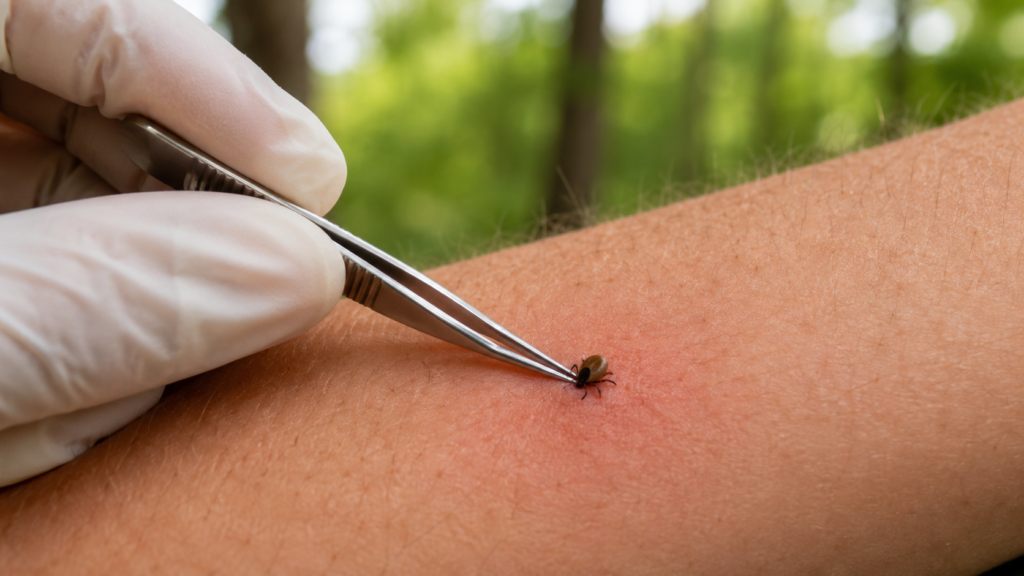
A tick bite may cause only a small area of redness or irritation, but some ticks can transmit illnesses that produce fever, rash, headache and body aches. Because the bite itself is often painless, many people do not realize that a tick has attached to their skin.
Recognizing possible tick bite symptoms, removing an attached tick promptly and monitoring your health afterward can help you decide when to contact a healthcare professional.
Tick Bite Symptoms: Quick Facts
| Question | Answer |
| What does a tick bite usually look like? | A small red or discolored bump, sometimes with mild swelling or irritation |
| Are tick bites painful? | Many are painless and may go unnoticed |
| Does every tick bite cause illness? | No, most tick bites do not result in a tick-borne disease |
| When can illness symptoms begin? | Depending on the illness, symptoms may appear within days or weeks |
| What symptoms require attention? | Fever, spreading rash, headache, fatigue, muscle aches or joint pain |
| How should an attached tick be removed? | Use clean, fine-tipped tweezers and pull upward with steady pressure |
| When should you contact a doctor? | If a rash, fever or other concerning symptoms develop after possible tick exposure |
What Does a Tick Bite Look Like?
A tick bite may initially look like a small mosquito bite. The skin around the bite can appear red, pink, purple or darker than the surrounding skin, depending on a person’s skin tone.
Common local skin reactions include:
- A small red or discolored bump
- Mild itching or irritation
- Slight swelling
- Tenderness around the bite
- A small scab as the area heals
A minor bump or redness that appears immediately after a tick bite and disappears within one or two days is generally a local skin reaction. It is not automatically a sign of Lyme disease.
Ticks are small and may attach in places that are difficult to see. After spending time outdoors, check areas such as:
- The scalp and hairline
- Behind the ears
- Under the arms
- Around the waist
- Behind the knees
- Between the legs
- In and around the groin
- Inside the belly button
Some ticks, particularly immature ticks known as nymphs, can be extremely small. A person may develop symptoms without remembering or noticing a bite.
Common Tick Bite Symptoms
The bite itself may produce little or no discomfort. When local symptoms occur, they are usually limited to the skin around the attachment site.
Possible mild symptoms include:
- Localized redness or discoloration
- Mild itching
- Slight swelling
- Minor tenderness
- A small sore or scab
These symptoms may result from irritation caused by the tick’s mouthparts and do not necessarily mean that an infection has developed.
Symptoms affecting the rest of the body deserve closer attention, particularly when they begin within days or weeks of possible tick exposure.
According to the Centers for Disease Control and Prevention, common symptoms associated with tick-borne illnesses may include:
- Fever or chills
- Headache
- Unusual fatigue
- Muscle aches
- Joint pain
- Swollen lymph nodes
- A new or spreading rash
Several tick-borne diseases can cause similar early symptoms. A healthcare professional may consider the symptoms, where the exposure happened and whether testing is appropriate.
Signs of Lyme Disease After a Tick Bite
Lyme disease is caused by bacteria transmitted through the bite of an infected blacklegged tick. Not every tick carries the bacteria, and not every bite causes Lyme disease.
Early Lyme disease symptoms may appear approximately 3 to 30 days after a tick bite. They can include:
- Fever
- Chills
- Headache
- Fatigue
- Muscle aches
- Joint pain
- Swollen lymph nodes
- An expanding skin rash
The rash associated with Lyme disease is called erythema migrans, or EM. According to the CDC’s Lyme disease symptom guidance, it gradually expands over several days and may feel warm. It is usually not painful or itchy.
The rash does not always look like a perfect bull’s-eye. It may appear as:
- A solid area of redness or discoloration
- An oval or circular expanding patch
- A rash with central clearing
- A bruise-like area on darker skin
- Multiple expanding patches on different parts of the body
Not everyone with Lyme disease develops or notices the characteristic rash. Flu-like symptoms after possible tick exposure should therefore not be ignored simply because no rash is present.
Other Illnesses Ticks Can Carry
Lyme disease is not the only illness associated with ticks. Depending on the tick species and geographic location, ticks in the United States may spread bacteria, viruses or parasites.
Examples include:
- Anaplasmosis
- Babesiosis
- Ehrlichiosis
- Rocky Mountain spotted fever
- Powassan virus disease
- Heartland virus disease
- Tularemia
- Bourbon virus disease
- Southern tick-associated rash illness
These conditions can have overlapping symptoms, including fever, fatigue, headache, muscle pain and rash. Symptoms alone may not identify the specific illness.
For more information about one rare tick-associated infection, read the Fresh Global News guide to Bourbon virus disease, its symptoms and treatment.
Signs of a Possible Tick-Borne Illness
Contact a healthcare professional when symptoms extend beyond a small local skin reaction, particularly after recent time in wooded, grassy or brushy areas.
Possible warning signs include:
Fever or chills
A fever developing after possible tick exposure may be associated with several tick-borne illnesses. Tell the healthcare professional when and where the possible exposure occurred.
A spreading or changing rash
Take a clear photograph of the rash and note the date. Seek medical advice if the rash expands, appears in multiple areas or continues to change.
Persistent headache or severe fatigue
A headache that does not improve, unusual exhaustion or feeling significantly unwell may require professional evaluation.
Muscle or joint pain
Body aches may occur with several infections. New joint swelling or severe joint pain should be evaluated, especially when accompanied by fever or rash.
Facial weakness or neurological symptoms
Facial drooping, numbness, tingling, severe dizziness, confusion or weakness should receive prompt medical attention.
Breathing or heart-related symptoms
Seek urgent medical help for difficulty breathing, chest discomfort, fainting, severe dizziness or a noticeably irregular heartbeat.
When to Contact a Healthcare Professional
Contact a healthcare professional promptly if you develop:
- A spreading or persistent rash
- Fever or chills
- Severe or persistent headache
- Unusual fatigue or weakness
- Muscle aches or joint pain
- Swollen joints
- Facial drooping
- Numbness or tingling
- Symptoms that are worsening rather than improving
The CDC advises people to seek medical attention if a rash or fever develops within several days to weeks after removing a tick.
When speaking with a healthcare professional, provide as much detail as possible:
- When the tick was discovered
- When it was removed
- Where on the body it was attached
- Where the possible exposure occurred
- Whether the tick appeared swollen or engorged
- When each symptom started
- Photographs of the tick, bite or rash
Do not delay medical care while attempting to identify or test a tick.
When to seek urgent care
Seek urgent or emergency medical help for severe symptoms such as:
- Trouble breathing
- Fainting
- Confusion
- Rapidly worsening weakness
- Severe dizziness
- Facial paralysis
- Severe headache with neck stiffness
- Chest pain or an irregular heartbeat
- Signs of a serious allergic reaction
How to Remove a Tick Safely
An attached tick should be removed as soon as possible. Do not wait for a medical appointment solely to have the tick removed.
The CDC’s tick-removal guidance recommends the following steps:
- Use clean, fine-tipped tweezers.
Regular tweezers may be used when fine-tipped tweezers are unavailable. - Grasp the tick close to the skin.
Hold it near its mouthparts rather than squeezing its swollen body. - Pull upward with steady, even pressure.
Do not twist, jerk or sharply pull the tick. - Clean the area and your hands.
Use soap and water, rubbing alcohol or hand sanitizer. - Dispose of the tick safely.
Place it in a sealed container, wrap it tightly in tape, put it in alcohol or flush it down the toilet. Do not crush it with bare fingers.
If small mouthparts remain in the skin and cannot easily be removed with clean tweezers, leave them alone and allow the skin to heal. Contact a healthcare professional if irritation continues or signs of a skin infection develop.
Tick-Removal Methods to Avoid
Do not use:
- Petroleum jelly
- Nail polish
- Essential oils
- Gasoline
- Heat or a burning match
- Harsh chemicals
- Forceful squeezing
These methods may irritate the tick and do not provide a safer removal method. Pulling the tick away from the skin with tweezers is the recommended approach.
What to Do After Removing the Tick
After removing the tick:
- Clean the bite area and your hands
- Check the rest of your body for additional ticks
- Photograph the bite site
- Record the date and likely exposure location
- Monitor for rash, fever or other symptoms
- Contact a healthcare professional if concerning symptoms develop
The CDC advises monitoring for symptoms during the following several weeks. An older CDC patient guide specifically recommends watching for symptoms for approximately 30 days.
Commercial tick testing is generally not recommended for making treatment decisions. A positive test does not prove that the person was infected, while a negative result may provide false reassurance.
Treatment decisions should be made by a qualified healthcare professional based on the person’s symptoms, exposure history, geographic location and, when appropriate, clinical testing.
How to Help Prevent Tick Bites
Reducing exposure is the most reliable way to lower the risk of tick-borne illnesses.
The CDC’s tick-bite prevention guidance recommends taking precautions before and after outdoor activities.
Before going outdoors
- Avoid areas with high grass, dense brush and heavy leaf litter when possible
- Walk near the center of trails
- Wear long pants and long sleeves
- Use an EPA-registered insect repellent according to its label
- Treat clothing and outdoor gear with an appropriate permethrin product
- Check pets for ticks regularly
After returning indoors
- Check clothing, bags and outdoor equipment
- Examine the entire body for ticks
- Help children check difficult-to-see areas
- Shower soon after returning indoors
- Check pets before allowing them onto beds or furniture
- Remove any attached ticks promptly
Tick exposure can occur in yards, parks, gardens and neighborhoods—not only during hiking or camping trips.
Frequently Asked Questions
Q1. Do tick bites always cause symptoms?
No. Many bites cause no noticeable symptoms or only minor skin irritation. A person may not realize that a tick was attached.
Q2. Does every tick bite cause Lyme disease?
No. Lyme disease occurs only when the tick is capable of carrying the responsible bacteria and transmits them during feeding. Risk varies according to tick species, location and attachment circumstances.
Q3. How quickly do tick bite symptoms appear?
A local bump may appear immediately. Symptoms of a tick-borne illness can develop within several days or weeks, depending on the infection.
Q4. Is every circular rash a sign of Lyme disease?
No. Several skin reactions and illnesses can cause circular rashes. However, an expanding rash after possible tick exposure should be evaluated by a healthcare professional.
Q5. Can Lyme disease occur without a rash?
Yes. A person can develop fever, fatigue, headache, muscle aches or other symptoms without noticing the classic rash.
Q6. Should I save the removed tick?
You may place it in a sealed container or take a clear photograph for possible identification. However, do not delay medical advice or rely on commercial tick-testing results to make healthcare decisions.
Q7. Should I take antibiotics after every tick bite?
No. Antibiotics are not automatically recommended after every bite. A healthcare professional determines whether preventive treatment or testing is appropriate based on individual circumstances.
Q8. What if I do not know whether the bite came from a tick?
Monitor the area and your general health. Contact a healthcare professional if you develop fever, an expanding rash, unusual fatigue, headache, body aches or other concerning symptoms after possible outdoor exposure.
Final Summary
Most tick bites cause little more than a small area of skin irritation, but some ticks can transmit illnesses that produce fever, rash, fatigue, headache, muscle pain or joint symptoms.
Remove an attached tick promptly using clean tweezers, clean the area and monitor for symptoms during the following weeks. Contact a healthcare professional if a rash, fever or worsening illness develops after possible tick exposure.
Readers can find more evidence-based explainers and public-health updates in the Fresh Global News Health section.
Medical disclaimer: This article provides general educational information and is not a substitute for professional medical advice, diagnosis or treatment. Contact a qualified healthcare professional about symptoms, possible tick exposure or treatment decisions. Seek urgent medical care for severe or rapidly worsening symptoms.