


Florida has confirmed 14 cases of Vibrio vulnificus infection and two deaths in 2026, according to the Florida Department of Health’s latest update, published August 6. The two reported deaths were recorded in Marion and Palm Beach counties.
Vibrio vulnificus is a naturally occurring bacterium found in warm coastal and brackish water. It can cause illness after a person eats contaminated raw or undercooked seafood, particularly oysters, or when an open wound is exposed to coastal water containing the bacteria.
Although the organism is often described in headlines as “flesh-eating bacteria,” that phrase is not a formal medical name. Some Vibrio vulnificus infections can cause necrotizing fasciitis, a severe infection in which tissue around a wound dies. Most infections do not develop into this condition.
Here is what the latest Florida numbers show, who faces the greatest risk, which symptoms require urgent attention, and how people can reduce their chances of infection.
Quick Answer
What is the flesh-eating bacteria reported in Florida?
The bacterium commonly associated with these reports is Vibrio vulnificus. It naturally lives in warm saltwater and brackish water and can enter the body through an open wound or through contaminated raw or undercooked seafood.
Florida has reported 14 confirmed cases and two deaths in 2026 as of August 6. Severe Vibrio vulnificus infections can progress quickly. The CDC says about 1 in 5 people with Vibrio vulnificus infection die, sometimes within a day or two after becoming ill.
Key Facts
- Florida has recorded 14 Vibrio vulnificus cases and two deaths in 2026 as of August 6.
- Cases have been reported in 10 Florida counties.
- Marion and Palm Beach counties have each recorded one death in 2026.
- Vibrio bacteria occur naturally in coastal waters and become more abundant during warmer months.
- Infection can occur after eating raw or undercooked seafood or when an open wound is exposed to coastal water.
- Some infections can lead to necrotizing fasciitis, septic shock, intensive care treatment, surgery or amputation.
- The CDC estimates about 80,000 vibriosis illnesses from all Vibrio species occur in the United States each year.
- About 1 in 5 people with Vibrio vulnificus infection die, according to the CDC.
Florida Vibrio Vulnificus Cases in 2026
The Florida Department of Health’s official Vibrio vulnificus data lists 14 confirmed cases and two deaths for 2026 as of August 6.
The cases are distributed as follows:
| County | 2026 Cases | 2026 Deaths |
| Bay | 1 | 0 |
| Brevard | 1 | 0 |
| Hillsborough | 1 | 0 |
| Lee | 2 | 0 |
| Marion | 2 | 1 |
| Miami-Dade | 2 | 0 |
| Okaloosa | 1 | 0 |
| Palm Beach | 2 | 1 |
| Polk | 1 | 0 |
| St. Johns | 1 | 0 |
| Total | 14 | 2 |
Florida recorded 82 cases and 19 deaths in 2024, followed by 33 cases and five deaths in 2025. The Department of Health said several counties experienced an unusual increase in 2024 associated with the impacts of Hurricane Helene. In 2022, Collier and Lee counties also experienced an unusual increase following Hurricane Ian.
Those figures are full-year totals, while the 2026 count covers only cases reported through August 6, so the numbers should not be treated as a direct year-to-year comparison.
What Is “Flesh-Eating Bacteria”?
“Flesh-eating bacteria” is an informal phrase rather than the medical name of a single organism or disease.
Several bacteria can cause necrotizing fasciitis, a serious infection that destroys skin and soft tissue. The CDC notes that some Vibrio vulnificus infections can cause necrotizing fasciitis, although group A Streptococcus is considered the most common cause of necrotizing fasciitis in the United States.
Vibrio vulnificus does not literally eat flesh. In severe wound infections, however, tissue can break down rapidly, creating the type of damage that led to the popular nickname.
Where Is Vibrio Vulnificus Found?
Vibrio bacteria occur naturally in certain coastal waters, including saltwater and brackish water, which is a mixture of salt and fresh water often found where rivers meet the ocean.
The CDC says Vibrio bacteria are generally found in higher numbers from May through October, when coastal water temperatures are warmer. Infections can still occur outside those months.
Florida’s extensive coastline and warm waters create environmental conditions in which the bacteria can occur naturally. Their presence does not necessarily mean that a beach or entire body of water is contaminated by a single pollution event.
How Do People Get Vibrio Vulnificus?
There are two major exposure routes.
Eating Raw or Undercooked Seafood
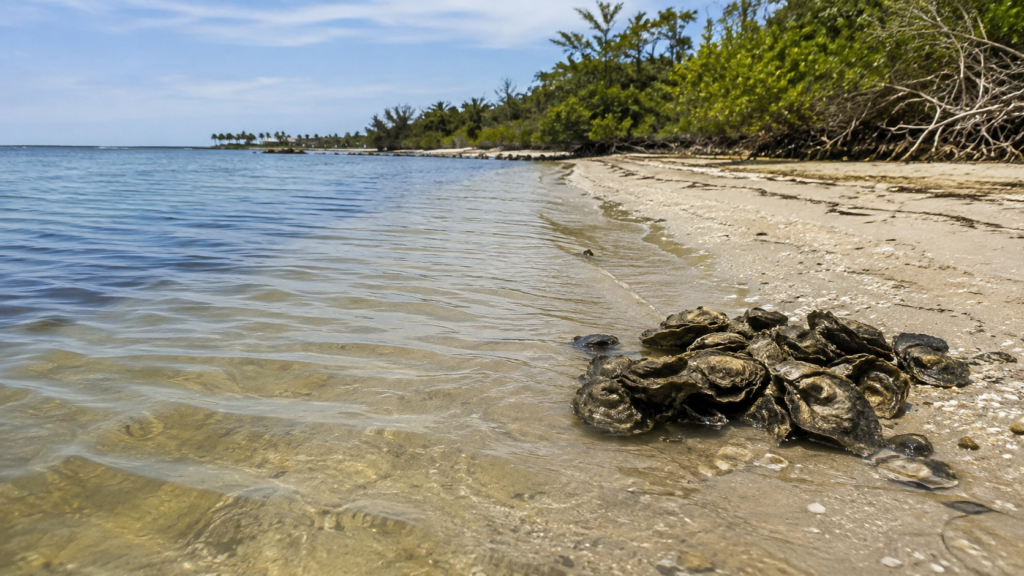
People can become infected after eating raw or undercooked seafood containing Vibrio bacteria. Oysters are a particular concern because they filter water while feeding and can concentrate bacteria in their tissues.
An oyster containing harmful Vibrio bacteria may look, smell and taste normal, so appearance alone cannot determine whether it is safe to eat. Cooking seafood properly is the safest way to reduce this risk.
Exposing an Open Wound to Coastal Water
Vibrio can also enter the body when an open wound comes into contact with saltwater or brackish water.
An open wound can include a cut, scrape, recent surgical site, piercing or tattoo. Contact between broken skin and raw seafood or its juices can also create an exposure risk.
Storm surge and coastal flooding can move coastal water into areas that are normally dry, creating additional opportunities for wound exposure after hurricanes and other severe weather events.
What Are the Symptoms of Vibrio Infection?
Symptoms vary depending on the type and location of the infection.
Intestinal Infection
Possible symptoms include:
- Watery diarrhea
- Stomach cramps
- Nausea
- Vomiting
- Fever
- Chills
Wound Infection
Warning signs can include:
- Redness
- Increasing pain
- Swelling
- Warmth around the wound
- Skin discoloration
- Fluid or discharge
- Fever
Bloodstream Infection
Severe bloodstream infection can cause:
- Fever and chills
- Dangerously low blood pressure
- Blistering skin lesions
- Septic shock
People with underlying medical conditions, particularly liver disease, face a greater risk of developing severe illness.
How Dangerous Is Vibrio Vulnificus?
Most Vibrio infections are not fatal, but Vibrio vulnificus is among the species most strongly associated with severe disease.
According to the CDC’s overview of Vibrio infection, many people with severe Vibrio vulnificus infection require intensive care, and some require surgery or limb amputation. About one in five people with the infection die, sometimes within one or two days after becoming ill.
The Florida Department of Health separately states that Vibrio vulnificus bloodstream infections are fatal in about half of cases. These statistics describe different groups of patients. The CDC’s one-in-five figure refers to Vibrio vulnificus infections overall, while Florida’s higher figure refers specifically to bloodstream infections.
That distinction is important because not every Vibrio infection develops into a bloodstream infection.
Who Is Most at Risk?
Anyone can develop a Vibrio infection, but some people face a greater risk of serious complications.
The CDC identifies increased risk among people with conditions or treatments including:
- Liver disease
- Cancer
- Diabetes
- HIV
- Thalassemia
- Treatments that suppress the immune system
- Certain medicines that reduce stomach acid
- Recent stomach surgery
People at increased risk should be particularly cautious about eating raw seafood and exposing wounds to coastal water.
For more coverage of medical conditions and health risks, visit Diseases & Conditions.
Can You Get Vibrio at a Florida Beach?
Yes, infection is possible if an open wound comes into contact with coastal water containing Vibrio.
The main concern is not simply being near the ocean. Risk increases when broken skin is exposed to saltwater or brackish water, especially during warm conditions.
Cuts, scrapes, recent tattoos, piercings and surgical wounds should be protected from coastal water. People with underlying conditions that increase the risk of severe infection should take extra precautions.
Can Raw Oysters Cause Vibrio Infection?
Yes.
Raw and undercooked oysters are a well-established route of Vibrio exposure. Because oysters filter large volumes of water, Vibrio bacteria naturally present in coastal environments can become concentrated inside them.
There is no reliable way to identify a contaminated oyster by appearance, taste or smell. Lemon juice, hot sauce and alcohol do not kill Vibrio bacteria. Proper cooking does.
How to Reduce the Risk of Vibrio Infection
The CDC recommends several practical steps to reduce the risk of foodborne and wound infections.
Cook Seafood Thoroughly
Avoid eating raw or undercooked oysters or other seafood.
For shellfish in the shell, the CDC advises boiling until the shells open and continuing to boil for another three to five minutes, or steaming in an already steaming pot for another four to nine minutes. Shellfish that do not open during cooking should be discarded.
For shucked oysters, CDC guidance includes boiling for at least three minutes, frying at 375°F for at least three minutes, broiling about three inches from the heat for three minutes, or baking at 450°F for 10 minutes.
Prevent Cross-Contamination
Keep cooked seafood away from raw seafood and its juices. Wash hands with soap and water after handling raw shellfish.
People at increased risk should consider wearing protective gloves when handling raw seafood.
Protect Open Wounds
If possible, avoid entering saltwater or brackish water with an open wound.
If contact cannot be avoided, cover the area with a waterproof bandage. Any wound exposed to coastal water or raw seafood should be washed promptly and thoroughly with soap and clean running water.
People at increased risk should also consider protective clothing and footwear to reduce cuts and scrapes around coastal water.
For broader updates involving disease prevention and community health, see Public Health.
When Should You Seek Medical Care?
Severe Vibrio infections can progress quickly.
Seek prompt medical attention if you develop a rapidly worsening wound after exposure to coastal water or raw seafood, particularly if there is increasing pain, redness, swelling, discoloration, blistering, drainage or fever.
Medical care is also important if significant gastrointestinal symptoms develop after eating raw or undercooked seafood, especially for someone with liver disease, a weakened immune system or another condition associated with severe Vibrio infection.
The CDC advises people with symptoms of a Vibrio bloodstream or wound infection to seek immediate medical care rather than waiting for symptoms to improve.
Tell the healthcare provider about any recent seawater exposure or raw seafood consumption because that information can help with diagnosis and treatment.
Why Hurricanes and Flooding Can Increase Risk
Hurricanes do not create Vibrio bacteria, but storm surge and coastal flooding can move saltwater and brackish water into places where people may come into contact with it while cleaning debris, returning home or moving through floodwater.
The CDC has warned that extreme weather events, including hurricanes, coastal flooding and storm surge, can increase opportunities for Vibrio wound infections. Florida documented unusual increases in Vibrio vulnificus cases following Hurricane Ian in 2022 and Hurricane Helene in 2024.
Anyone cleaning up after coastal flooding should protect cuts and wounds and avoid direct contact with potentially contaminated water when possible.
What We Know About Florida’s 2026 Cases
As of the state’s August 6 update:
- Florida has confirmed 14 Vibrio vulnificus cases in 2026.
- Two deaths have been reported.
- The deaths were recorded in Marion and Palm Beach counties.
- Lee, Marion, Miami-Dade and Palm Beach counties have each reported two cases.
- Bay, Brevard, Hillsborough, Okaloosa, Polk and St. Johns counties have each reported one case.
- Florida’s official case count may change as additional infections are reported during the year.
The latest figures reinforce an important distinction: Vibrio vulnificus is naturally present in coastal environments, but severe illness remains uncommon. The greatest concern is for people with open wounds, people eating raw or undercooked seafood, and those with medical conditions that increase their risk of complications.
Frequently Asked Questions
Q1. Is “flesh-eating bacteria” an official medical term?
No. It is an informal description sometimes used for bacteria that can cause severe tissue-destroying infections. Vibrio vulnificus can cause necrotizing fasciitis in some cases, but the bacterium’s medical name is Vibrio vulnificus.
Q2. How many Vibrio vulnificus cases has Florida reported in 2026?
Florida has confirmed 14 cases and two deaths as of August 6, 2026, according to the state’s latest published update.
Q3. Which Florida counties have reported deaths in 2026?
The state’s current table records one death in Marion County and one in Palm Beach County.
Q4. Is Vibrio vulnificus contagious?
Vibrio vulnificus is primarily acquired through environmental or food exposure rather than ordinary person-to-person transmission. Infection is most commonly associated with contaminated seafood or exposure of a wound to coastal water.
Q5. Can a healthy person get Vibrio vulnificus?
Yes. Anyone can become infected, but people with certain underlying medical conditions, especially liver disease or weakened immunity, have a greater risk of severe complications.
Q6. Does cooking oysters kill Vibrio?
Proper cooking kills harmful Vibrio bacteria. Raw or undercooked oysters carry greater risk. Appearance, smell or taste cannot reliably reveal whether an oyster contains harmful bacteria.
Q7. Should you swim with an open wound?
The CDC recommends staying out of saltwater or brackish water when you have an open wound if possible. If exposure cannot be avoided, cover the wound with a waterproof bandage and wash it thoroughly afterward.
Q8. Does hurricane season affect Vibrio risk?
Storm surge and coastal flooding can increase opportunities for exposure by bringing coastal water into normally dry areas. Florida reported unusual increases in cases following Hurricane Ian in 2022 and Hurricane Helene in 2024.
Q9. What should I do if I think I have a Vibrio infection?
Seek medical care promptly if you develop signs of a wound infection after coastal water exposure or significant illness after eating raw or undercooked seafood. Tell the healthcare provider about the possible exposure. Severe Vibrio vulnificus infections can worsen rapidly.
Bottom Line
Florida has reported 14 Vibrio vulnificus cases and two deaths in 2026 as of August 6. The bacterium occurs naturally in warm coastal and brackish water and can cause infection through raw or undercooked seafood or exposure of broken skin to coastal water.
Most people will not develop a life-threatening infection, but severe Vibrio vulnificus illness can progress quickly, particularly in people with liver disease or other conditions that increase their risk.
Avoiding raw shellfish, cooking seafood thoroughly, protecting open wounds from coastal water and seeking prompt medical care when concerning symptoms develop are the most important steps for reducing the risk.
This article is for general informational purposes and is not a substitute for professional medical advice, diagnosis or treatment.