


For years, some NATO allies viewed Turkey as one of the alliance’s more difficult members, a country whose vetoes, disputes, and independent streak often slowed down NATO decision-making. In 2026, that view is shifting. Turkey’s NATO relations are increasingly described by officials and analysts as a strategic partnership NATO cannot afford to overlook.
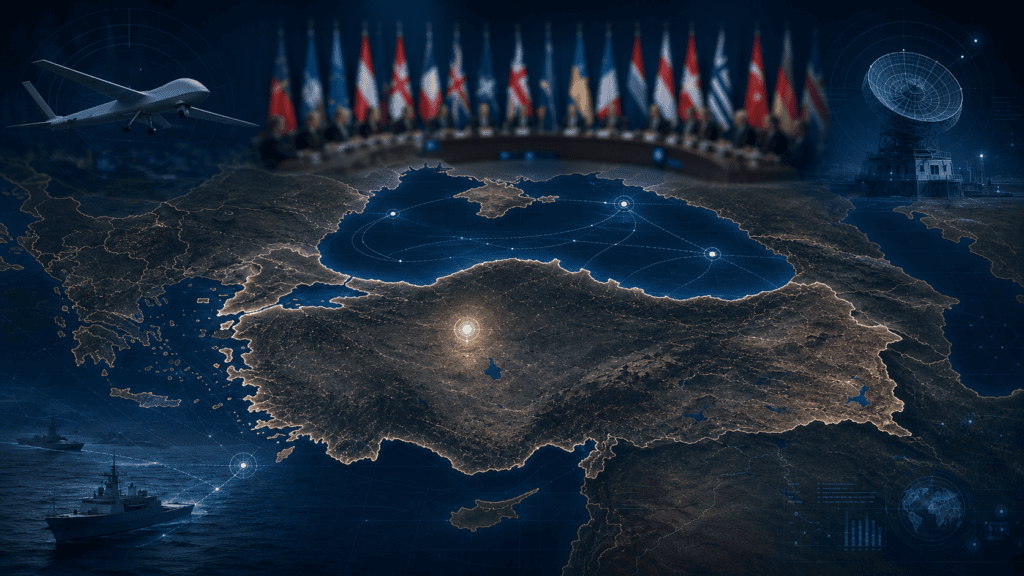
The change comes down to a mix of factors: Turkey’s military size, its command of the Black Sea, a fast-growing defense industry, its involvement in the response to Russia’s war in Ukraine, and President Recep Tayyip Erdogan’s own diplomatic standing, including his rapport with U.S. President Donald Trump. As NATO leaders gathered in Ankara for the 2026 summit, these factors were on full display.
Key Points
- Turkey has NATO’s second-largest army after the United States.
- Turkey controls maritime access to the Black Sea through key straits.
- The war in Ukraine has increased NATO’s need for arms production and reliable regional partners.
- Turkey’s defense industry has grown rapidly, especially in drones, artillery shells, and other military equipment.
- Erdogan’s relationship with Donald Trump has added to Turkey’s diplomatic weight inside the alliance.
- Some NATO allies still have concerns about Turkey’s domestic politics and independent foreign policy moves.
Why Turkey Matters to NATO
Turkey sits at a crossroads that few other NATO members occupy. It borders Europe, the Middle East, the Black Sea, and the Caucasus, giving it a geographic footprint that touches nearly every major security concern facing the alliance today, from Russia’s war in Ukraine to instability in Syria and tension in the eastern Mediterranean.
That location alone makes Turkey central to NATO security planning. A country bordering both the Black Sea and the wider Middle East is difficult to plan around rather than with. Analysts who study the alliance describe Turkey’s position as a source of what one Ankara-based researcher called a long-running “paradox”: Turkey is militarily valuable and geographically essential, even when its politics create friction with other members.
How the Ukraine War Changed Turkey’s Role
Russia’s full-scale invasion of Ukraine in 2022 reshaped how NATO thinks about its eastern and southern flanks. Suddenly, questions that once felt secondary, such as who controls Black Sea shipping lanes, who can quickly produce ammunition and equipment, and who can talk to both Moscow and Kyiv, became central to alliance strategy.
Turkey checked several of those boxes at once. It has maintained a working relationship with Russia while also supplying military equipment to Ukraine, largely through private Turkish defense firms. That balancing act, unusual among NATO members, has made Turkey useful as both a security partner and, at times, an informal channel of communication. NATO’s growing need for arms production capacity and dependable regional partners has only reinforced Turkey’s importance since the war began.
Turkey’s Military Strength and Black Sea Position
Turkey fields NATO’s second-largest army after the United States, a fact that carries real weight inside an alliance now focused on troop levels and readiness. Beyond manpower, Turkey controls the Bosphorus and Dardanelles straits, the only maritime routes connecting the Black Sea to the Mediterranean.
That control matters enormously for the war in Ukraine. Under the 1936 Montreux Convention, Turkey has the authority to restrict the passage of warships through the straits during wartime, a power Ankara has used to limit Russian naval movement since 2022. For a general reader, the simplest way to understand it is this: whoever controls those narrow waterways has significant influence over what happens on the Black Sea itself, and that gives Turkey leverage that few other NATO members can match.
Turkey’s Growing Defense Industry
Turkey’s defense sector has expanded substantially in recent years, particularly in unmanned systems. Turkish-made armed drones, most notably from the company Baykar, have become a significant presence in global arms markets, with exports reaching dozens of countries. Turkish firms also produce artillery shells, armored vehicles, air defense systems, and naval equipment, and the country has set a goal of substantially increasing defense exports in the coming years.
Turkish defense companies are often described by buyers and analysts as faster to deliver and less expensive than many Western competitors, an advantage that has helped Turkey secure contracts in Europe, the Gulf, Africa, and Central Asia. As European governments rush to rebuild depleted stockpiles and expand defense production following the war in Ukraine, Turkey’s manufacturing capacity has positioned it as a potential industrial partner for NATO allies, alongside continued efforts to deepen cooperation with European defense firms.
Erdogan, Trump, and NATO Diplomacy
President Erdogan’s relationship with Donald Trump has become a notable factor in Turkey’s standing within NATO. The two leaders have described a friendly rapport, and Trump has at times praised Turkey’s role in the alliance even while criticizing other member states over defense spending.
Turkey’s hosting of the 2026 NATO summit in Ankara, only the second time Turkey has hosted a summit after Istanbul in 2004, gave Erdogan a prominent diplomatic platform. Discussions at the summit touched on defense spending commitments, continued support for Ukraine, and potential U.S. defense sales to Turkey, including long-standing questions about F-35 fighter jets. Turkey’s flagship domestic fighter jet program has also factored into these discussions, as Ankara looks to secure American engines and technology for the aircraft.
Why NATO Allies Still Have Concerns About Turkey
Despite its growing importance, Turkey remains a source of unease for some NATO members. Concerns persist about the state of democratic institutions and press freedom inside Turkey, along with periodic crackdowns on opposition figures and civil society groups.
Turkey’s history of using its veto power within NATO has also left an impression. Ankara delayed the accession of Finland and Sweden to the alliance for months, using the process to press its own security demands. Long-standing tensions with fellow NATO members Greece and Cyprus remain unresolved, and Turkey’s continued economic and diplomatic ties with Russia, including its decision not to join Western sanctions, are viewed warily by some allies. Analysts note that Turkey’s influence tends to expand when the security threat feels urgent and contract when allies feel they can manage without it, a dynamic likely to keep shaping the relationship going forward.
What Could Happen Next?
Looking ahead, Turkey appears likely to continue pressing for expanded defense industry deals with NATO partners, greater recognition of its military contributions, and progress on long-discussed military equipment purchases, including advanced fighter jets and related technology from the United States. Deeper integration between Turkish and European defense manufacturers also appears to be a growing trend, though political obstacles, including Turkey’s exclusion from some European Union defense funding programs, could complicate that path.
None of these outcomes are guaranteed. Turkey’s relationship with NATO has historically moved in cycles, shaped as much by external threats as by internal politics on all sides. What seems clear for now is that Turkey’s combination of military size, geography, and industrial capacity has made it a harder country for NATO to sideline than in years past.
Frequently Asked Questions
Q1. Why is Turkey important to NATO?
Turkey combines a large military, a strategic location bordering the Black Sea and the Middle East, and a growing defense industry, all of which have become more valuable to NATO since Russia invaded Ukraine.
Q2. Does Turkey have NATO’s second-largest army?
Yes. Turkey maintains the second-largest armed force in NATO after the United States.
Q3. Why does the Black Sea matter to NATO?
Turkey controls the Bosphorus and Dardanelles straits, the only sea routes linking the Black Sea to the Mediterranean. Under international agreements, Turkey can restrict warship movement through these straits during wartime, giving it significant influence over Black Sea security.
Q4. How has the Ukraine war increased Turkey’s importance?
The war raised the value of countries that can help supply arms, secure the Black Sea, and maintain lines of communication with both Russia and Ukraine, roles that Turkey has taken on in different ways.
Q5. Why do some NATO members still distrust Turkey?
Concerns include Turkey’s domestic political direction, its use of veto power within NATO, unresolved disputes with Greece and Cyprus, and its continued relationship with Russia.
Q6. What is Erdogan’s role in NATO diplomacy?
Erdogan has used Turkey’s strategic position and his personal relationship with U.S. President Donald Trump to raise Turkey’s profile within the alliance, including hosting the 2026 NATO summit in Ankara.
Conclusion
Turkey’s rise in importance to NATO did not happen overnight. It reflects years of military investment, a defense industry built to compete globally, and a geographic position that has become more consequential as the war in Ukraine reshapes European security. At the same time, the concerns that have long complicated Turkey’s relationship with its NATO allies have not disappeared. How the alliance manages that balance, treating Turkey as both indispensable and, at times, unpredictable, is likely to remain one of the more closely watched dynamics inside NATO in the years ahead.
Read more: Latest World Politics News Related: Ukraine War Updates Related: NATO Summit 2026 Explained Related: Turkey’s Defense Industry Growth
Sources
This article draws on information from NATO’s official website and summit materials, reporting from Reuters and the Associated Press, statements from Turkish government and defense officials, and analysis from established foreign policy and defense research publications. No direct quotations from these sources are used; all information has been independently summarized and rewritten.