



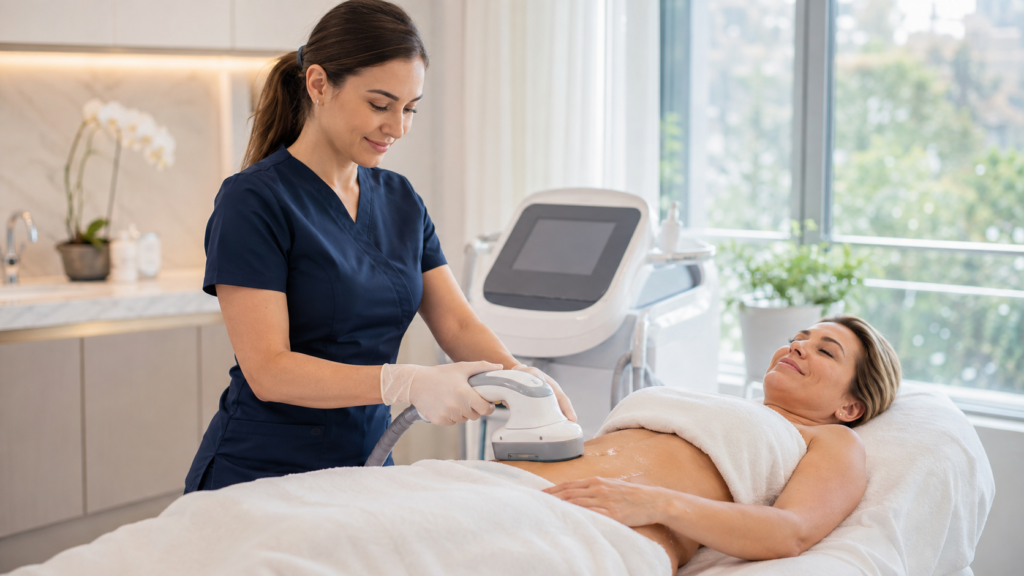
Body contouring describes cosmetic treatments that aim to change the shape or appearance of a specific body area. People often consider these procedures when small areas of fullness, cellulite, reduced muscle tone or uneven contours remain despite consistent nutrition and exercise.
Body contouring is not the same as weight loss. Non-surgical treatments may change the appearance of a targeted area, but they do not treat obesity, produce meaningful weight loss or provide the health benefits associated with losing excess weight. Results vary, and some effects may only last temporarily. The U.S. Food and Drug Administration’s body-contouring guidance makes this distinction clear.
Quick Answer
Non-surgical body contouring uses cooling, heat, ultrasound, light, magnetic energy or mechanical pressure without surgical incisions. Depending on the device, treatment may reduce a small fat bulge, temporarily improve cellulite, tighten the appearance of skin or improve muscle tone.
What Is Body Contouring?
Body contouring, sometimes called body sculpting, includes both surgical and non-surgical procedures.
Surgical options include liposuction and abdominoplasty. These procedures can remove fat or excess skin through incisions and usually involve anesthesia and a longer recovery period.
Non-surgical body contouring works from the skin’s surface and does not surgically remove tissue. Different devices may affect fat, skin, connective tissue or muscle. Each device has its own intended purpose, treatment areas, limitations and safety considerations.
How Does Non-Surgical Body Contouring Work?
A provider places an applicator or handheld device on the selected body area and delivers controlled energy or pressure.
| Technology | Possible cosmetic goal |
| Cryolipolysis | Uses controlled cooling to reduce a small fat bulge |
| Radiofrequency | May improve circumference, cellulite or skin tightness |
| Ultrasound | Uses sound-wave energy to target tissue beneath the skin |
| Light or laser | Applies controlled heat to a selected treatment area |
| Magnetic stimulation | Triggers muscle contractions to improve muscle tone |
| Massage or vibration | May temporarily improve the appearance of cellulite |
These technologies are not interchangeable. A device designed for one body area or cosmetic purpose may not suit another area.
Consumers should ask for the device’s exact brand, model and intended use before agreeing to treatment.
Potential Benefits of Body Contouring
One potential advantage of body contouring is its ability to focus on a selected area. Depending on the device, common treatment areas may include the abdomen, thighs, arms, waistline, back or the area under the chin.
Non-surgical treatments also avoid the incisions used during liposuction and skin-removal surgery. Many people can return to regular activities sooner, although redness, soreness or other temporary effects may still occur.
Some treatments produce gradual changes over several weeks or months. This may appeal to people who prefer a non-surgical approach and understand that results can be modest.
A professional consultation also allows the provider to review the treatment area, medical history, cosmetic goals and realistic expectations.
What to Expect During Treatment
Before treatment, the provider should explain:
- The device and technology
- The intended treatment area
- The expected outcome
- The recommended number of sessions
- Possible side effects
- Aftercare instructions
- The total cost
Patients should disclose their medications, pregnancy or breastfeeding status, implanted devices, metal implants, skin conditions, infections, previous surgery and circulation or bleeding problems.
During the session, the provider prepares the selected area and positions the applicator. Depending on the technology, a patient may feel pressure, pulling, cooling, warmth, vibration, tingling or muscle contractions.
After treatment, some people resume their normal activities quickly. Others may experience redness, swelling, bruising, tenderness, numbness or soreness. Patients should follow the instructions provided for the specific device rather than using one general aftercare plan for every procedure.
People returning to outdoor exercise during hot weather can also review the Fresh Global News guide to extreme heat safety and health risks.
Who May Consider Body Contouring?
A suitable candidate generally has a specific cosmetic concern, understands that treatment will not produce major weight loss and has realistic expectations.
More than one session may be necessary, and results may not remain permanent. A consultation should help determine whether the expected change justifies the cost and potential risks.
Eligibility depends on the technology. Pregnancy, an active skin infection, poor circulation, cold-sensitivity disorders, implanted electronic devices, metal in the treatment area, certain medical conditions or some medications may make a procedure unsuitable.
Consumers should also confirm who will perform the procedure. The Medical Board of California’s guidance for medical spas advises consumers to check the provider’s license, training and experience before receiving cosmetic medical treatment.
Risks and Possible Side Effects
All body-contouring devices carry potential risks. Common short-term effects may include:
- Pain or discomfort
- Redness
- Swelling
- Bruising
- Tenderness
- Temporary numbness
- Small lumps
Certain procedures may cause burns, blisters, skin-colour changes, scarring or nerve injury.
Fat-freezing treatments can also cause a rare complication known as paradoxical adipose hyperplasia. This complication causes fatty tissue to grow instead of shrinking and may require surgery to correct.
Patients should ask for the manufacturer’s patient information and the device’s exact FDA marketing status. “FDA cleared,” “FDA approved” and “FDA registered” do not carry the same meaning. The FDA provides a searchable resource for checking whether a medical device has received marketing clearance or authorization.
When Do Results Appear?
The timeline depends on the technology, treatment area and individual response.
Some changes may develop gradually over several weeks or months. Other treatments may require repeated or maintenance sessions.
A responsible provider should not guarantee a specific amount of fat loss, permanent results or the same outcome for every person. Before-and-after photographs may illustrate possible results, but they cannot predict how one individual will respond.
Body Contouring vs Weight Loss
| Body contouring | Weight loss |
| Focuses on selected body areas | Reduces overall body weight |
| May address small fat bulges, cellulite or muscle tone | May involve nutrition, exercise, medication or surgery |
| Does not treat obesity | Can improve health when medically appropriate |
| Results may be temporary | Long-term results depend on treatment and habits |
People seeking significant weight loss should discuss evidence-based weight-management options with a qualified healthcare professional.
Body Contouring at H-Bling Wellness
H-Bling Wellness operates in Brea, California, and offers a range of beauty, recovery and wellness services.
The clinic offers a non-invasive service called Below Zero Sculpting. H-Bling describes the service as a CO₂ and therapeutic cooling treatment for areas including the abdomen, thighs, arms, back, calves, knees and neck.
Prospective clients should ask H-Bling for:
- The device’s exact brand and model
- Its FDA marketing or clearance status
- The provider’s qualifications
- The recommended number of sessions
- The complete treatment cost
- Contraindications and possible risks
- Written aftercare instructions
A personalized consultation can help clients compare Below Zero Sculpting with other non-surgical or surgical body-contouring approaches.
Frequently Asked Questions
Q1. Is body contouring a weight-loss treatment?
No. Body contouring may change the appearance of a selected area, but it does not treat obesity or provide the health benefits associated with meaningful weight loss.
Q2. Is non-surgical body contouring painful?
The experience varies by technology and individual sensitivity. People may feel cooling, warmth, pressure, pulling, vibration, tingling or muscle contractions. Temporary soreness may occur afterward.
Q3. How many sessions are needed?
The number depends on the device, treatment area, desired result and individual response. Ask for a written treatment plan before purchasing a package.
Q4. Are body-contouring results permanent?
Some effects may last, while others may fade or require maintenance sessions. Aging, weight changes, lifestyle and the technology used can influence the outcome.
Q5. How should I choose a provider?
Check the provider’s license and training, identify the exact device, verify its intended use and review its possible risks. Avoid providers who guarantee results or pressure you to purchase a treatment package immediately.
Final Takeaway
Non-surgical body contouring may offer modest cosmetic changes without surgery, but it does not replace weight loss, exercise, medical care or healthy habits. Every technology has different benefits, limitations and risks.
Research the exact procedure, provider qualifications, expected results, side effects, cost and alternatives before deciding. H-Bling Wellness offers one local body-contouring option for people in Brea, California, but each client should make the final decision after an individualized consultation.
For more educational health and wellness coverage, visit the Fresh Global News Health section.
Medical Disclaimer
This article provides general educational information and does not replace professional medical advice, diagnosis or treatment. Consult a qualified healthcare professional before undergoing any cosmetic procedure.