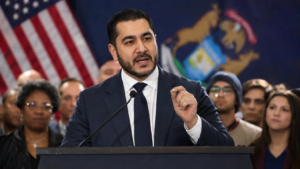



President Donald Trump is pushing Senate Republican leaders to pass voter-identification and citizenship-verification legislation before the chamber’s August recess, according to the Associated Press. The push centers on a House-passed measure that would require documentary proof of citizenship to register for federal elections and photo identification to cast a ballot in them, but the bill has not cleared the Senate, and Republicans do not currently appear to have the 60 votes generally needed to move most legislation past a filibuster.
The proposals travel under the name “SAVE America Act,” but that label currently covers three separate pieces of legislation moving on different tracks in Congress. Two standalone bills, H.R. 7296 in the House and S. 3752 in the Senate, remain at the introduced stage. A third and more advanced path runs through S. 1383, a bill that started out concerning a veterans advisory committee before the House replaced its text with SAVE America Act language and passed it in February.
As of July 28, 2026, the SAVE America Act is not federal law. The House passed SAVE America Act language as an amendment replacing the original text of S. 1383 on February 11, but the Senate has not approved that House amendment. Separate House and Senate versions, H.R. 7296 and S. 3752, remain at the introduced stage.
Latest Status
- H.R. 7296 (SAVE America Act): Introduced by Rep. Chip Roy on January 30, 2026; referred to the House Committee on House Administration. Introduced only; has not passed either chamber.
- S. 3752 (Senate SAVE America Act): Introduced by Sen. Mike Lee on January 29, 2026; referred to the Senate Committee on Rules and Administration. Introduced only, has not passed either chamber.
- S. 1383: Originally a veterans advisory committee bill, passed by the Senate by unanimous consent on December 18, 2025. On February 11, 2026, the House substituted SAVE America Act language for the entire text after the enacting clause and passed the amended bill 218–213. The Senate received the House amendment on February 12, 2026, and has not yet agreed to it.
In one sentence: If ultimately enacted, the legislation would require documentary proof of citizenship to register to vote in federal elections, photo identification to vote in person, and an identification copy when requesting or returning an absentee ballot, while directing states to set up an alternative verification process for voters who lack the standard documents.
What Is the SAVE America Act?
The SAVE America Act 2026 is a set of related federal proposals that would tighten identification and citizenship-verification rules for federal elections. It would generally require documentary proof of citizenship, such as a passport, birth certificate, or other qualifying document, when a person registers to vote, which is separate from the photo identification a voter might be asked to show at the polls when actually casting a ballot. Neither requirement is currently federal law.
Why Is the SAVE America Act in the News?
The bill has resurfaced as a political flashpoint heading into the 2026 midterm elections. According to the Associated Press, President Trump has been pressing Senate Republican leaders to bring the House-passed S. 1383 language to a vote before lawmakers leave for the August recess. Republican leaders, however, face the reality that most legislation requires 60 votes to overcome a Senate filibuster, and the AP reports the GOP does not currently have that level of support lined up.
The House’s 218–213 vote in February showed the measure can pass on a narrow, largely party-line basis in that chamber. Whether the Senate takes it up, amends it, lets it stall, or attaches similar language to another bill remains an open question.
What Would the SAVE America Act Require?
Proof of citizenship during voter registration
Under H.R. 7296, as summarized on Congress.gov, people registering to vote in federal elections would need to present documentary proof of U.S. citizenship, rather than simply attesting to their citizenship status on a registration form, as current federal law generally allows.
Photo identification when voting
The bill would also require voters to present photo identification when voting in federal elections, a separate step from the registration requirement, since a person could be validly registered but still need to show ID at the polls.
Absentee and mail voting
According to the bill’s summary, voters casting an absentee ballot would need to provide a copy of qualifying identification with both the ballot request and the completed, returned ballot. The available bill text does not indicate that mail voting itself would be eliminated.
Alternative process for voters without standard documents
H.R. 7296 directs states to establish an alternative citizenship-verification process for applicants who cannot present the standard listed documents. That provision means the bill, as introduced, does not simply bar registration for anyone without a passport or an easily accessible birth certificate, though how any alternative process would work in practice would depend on rules each state adopts if the bill becomes law.
Is Noncitizen Voting Already Illegal?
Yes. Under existing federal law, it is already illegal for noncitizens to vote in federal elections, and voter registration forms already require applicants to attest to their U.S. citizenship under penalty of perjury. The SAVE America Act would not create a new prohibition on noncitizen voting; it would change how citizenship is verified at the point of registration.
Confirmed instances of noncitizens actually casting ballots are difficult to measure precisely, and nonpartisan researchers and state election officials have generally described confirmed cases as rare relative to the total number of ballots cast, though comprehensive nationwide data is limited. Supporters and critics of the bill draw different conclusions from that same uncertainty.
Why Do Supporters Back the Bill?
Bill sponsors and supportive lawmakers argue the measure would strengthen confidence in federal elections by standardizing verification requirements across states. Rep. Chip Roy and Sen. Mike Lee, the bills’ sponsors, have framed the legislation as an election-integrity measure intended to keep voter rolls accurate and prevent ineligible registrations before they happen, rather than relying only on after-the-fact enforcement. Supporters also argue that federal, uniform documentation standards would reduce the patchwork of differing state rules and give election officials a clearer basis for maintaining voter lists.
Why Do Critics Oppose the Bill?
Voting-rights organizations and Democratic lawmakers argue the documentation requirements would create real barriers for eligible citizens, even though the bill includes an alternative verification process. Critics point to several groups they say are most likely to be affected: people whose current legal name differs from the name on their birth certificate, often after marriage or divorce; naturalized citizens whose citizenship documents may not be readily on hand; and lower-income, elderly, or rural voters who are less likely to hold a passport or have easy access to a certified birth certificate.
Critics also raise concerns about administrative costs for states that would need to build or expand verification systems, potential delays in processing registrations, and the risk that database errors could result in eligible voters being flagged or removed. Voting-rights researchers argue that even a well-designed alternative process can create friction that discourages registration, particularly through mail-based voter registration drives.
Who Could Be Most Affected?
Election-law analysts point to several groups whose experience with the bill’s requirements could differ from that of the general voting population:
- First-time voters, who may not yet have gathered standard citizenship documents.
- Married voters whose legal name has changed and no longer matches their birth certificate.
- Naturalized citizens, who would need to locate naturalization or citizenship documents rather than a birth certificate.
- Older adults, some of whom were never issued a standard birth certificate.
- Tribal citizens, whose documentation practices can differ from state-issued vital records.
- Military and overseas voters, who often rely on absentee processes that would be affected by the bill’s identification-copy requirement.
- People registering by mail, including through community voter-registration drives.
None of this means every person in these groups would be automatically unable to vote. The bill’s alternative verification process is intended to address at least some of these situations, though how effectively it would do so is not yet established, since it has not been implemented or tested.
How Would the Act Affect State Election Systems?
If enacted, states would need to update voter-registration databases, build or adapt processes to check documentary proof of citizenship, and train election workers to apply the new rules consistently. The legislation would also raise questions about the balance between federal standards and states’ traditional authority over how they administer their own elections, which election-law analysts say could lead to implementation disputes or litigation after passage. States would also likely face new administrative costs tied to verification systems and staff training. However, the scale of those costs has not been independently estimated in the bill’s available materials.
Is the SAVE America Act Currently Law?
No. For any version of the SAVE America Act to become federal law, several steps would still need to happen: the House and Senate would need to pass identical legislative text, any differences between House and Senate versions would need to be resolved, and the president would need to sign the resulting bill (or Congress would need to override a veto). Right now, the House has passed SAVE America Act language only as an amendment to S. 1383, and the Senate has not agreed to that amendment. The standalone H.R. 7296 and S. 3752 bills remain at the introduced stage in their respective chambers.
What Happens Next?
The most immediate question is whether Senate Majority Leader and other GOP leaders bring the House-passed S. 1383 amendment to the floor before the August recess, as President Trump has urged, according to the AP. Because most legislation needs 60 votes to overcome a Senate filibuster, and Republicans do not currently appear to have that support, several outcomes remain possible: the Senate could vote and fail to advance the measure, leaders could delay a vote altogether, negotiators could work toward a narrower compromise, or the underlying language could be attached to a different piece of must-pass legislation later in the year. If any version is ultimately enacted, legal challenges are considered likely given the disputes over documentation requirements raised by voting-rights groups.
Supporters Say vs. Critics Say
| Supporters say | Critics say |
| Citizenship documents could strengthen verification | Document requirements could burden eligible voters |
| Photo ID may increase confidence in elections | Not all eligible voters have acceptable identification |
| Federal standards could create consistency | Election administration traditionally differs by state |
| Stronger list maintenance may remove ineligible records | Database errors could affect eligible citizens |
This table summarizes arguments made by each side, not proven outcomes.
What Should Voters Do Now?
Current voter registration and identification rules remain governed by existing federal and state law unless and until new legislation takes effect. Voters can:
- Check their registration status through their official state election website.
- Review their state’s current identification rules for in-person and mail voting.
- Confirm upcoming registration and ballot deadlines.
- Use official state or county election-office contact information for questions.
- Avoid relying on viral social media posts for legislative updates, since bill status can change quickly.
Frequently Asked Questions
Q1. What is the SAVE America Act?
The SAVE America Act 2026 refers to related federal proposals, H.R. 7296, S. 3752, and language added to S. 1383, that would require documentary proof of citizenship to register to vote and photo identification to vote in federal elections. None of these has become law as of July 28, 2026.
Q2. Is the SAVE America Act currently law?
No. The House has passed SAVE America Act language only as an amendment to S. 1383, which the Senate has not approved. The standalone H.R. 7296 and S. 3752 bills have been introduced but not passed by either chamber, and no version has been signed by the president.
Q3. Does the SAVE America Act require proof of citizenship?
Yes. H.R. 7296, as summarized on Congress.gov, would require documentary proof of U.S. citizenship when registering to vote in federal elections, replacing the current practice of attesting to citizenship on the registration form.
Q4. Would a driver’s license prove citizenship?
Not necessarily. Most standard state driver’s licenses do not indicate citizenship status, so they would likely not satisfy a documentary proof-of-citizenship requirement on their own. Voters without a qualifying document would fall under the bill’s alternative verification process.
Q5. Would voters need a passport?
A passport is expected to count as documentary proof of citizenship, but the bill does not make it the only option. It directs states to create an alternative verification process for people who do not have a passport or similar document readily available.
Q6. How could married voters be affected?
Critics have raised concerns that voters whose legal name changed after marriage or divorce may find their current ID does not match the name on their birth certificate, potentially complicating the verification process, though the bill’s alternative process is intended to address documentation mismatches.
Q7. Would the act affect mail-in voting?
Yes, in a specific way. According to the bill’s summary, absentee voters would need to include a copy of qualifying identification with both their ballot request and their completed, returned ballot. Available bill text does not indicate mail voting would be eliminated.
Q8. Is noncitizen voting already illegal?
Yes. Federal law already prohibits noncitizens from voting in federal elections, and registration forms already require an attestation of citizenship. The SAVE America Act would change how that citizenship is verified, not create a new prohibition.
Q9. Did the House pass the SAVE America Act?
The House passed SAVE America Act language, but as an amendment substituted into S. 1383, originally a veterans advisory committee bill, by a vote of 218–213 on February 11, 2026. It did not pass the standalone H.R. 7296 bill, and the Senate has not agreed to the House’s amended version of S. 1383.
Q10. What must happen before the bill becomes law?
The House and Senate would need to pass identical legislative text, either by the Senate agreeing to the House’s S. 1383 amendment or through another path, and the president would need to sign the resulting bill. As of July 28, 2026, that has not happened.
Conclusion
As of July 28, 2026, the SAVE America Act is not federal law. The House has passed SAVE America Act language only as an amendment to S. 1383, which the Senate has not taken up, while standalone bills H.R. 7296 and S. 3752 remain at the introduced stage. The measure would require documentary proof of citizenship to register to vote and photo identification to vote in federal elections, along with new identification steps for absentee ballots, while directing states to build an alternative verification process for voters without standard documents. Supporters frame it as an election-integrity measure; critics warn it could burden eligible voters who lack easy access to certain documents. Readers who want to follow developments should check official congressional and state election sources directly, since the legislative status can change quickly.