


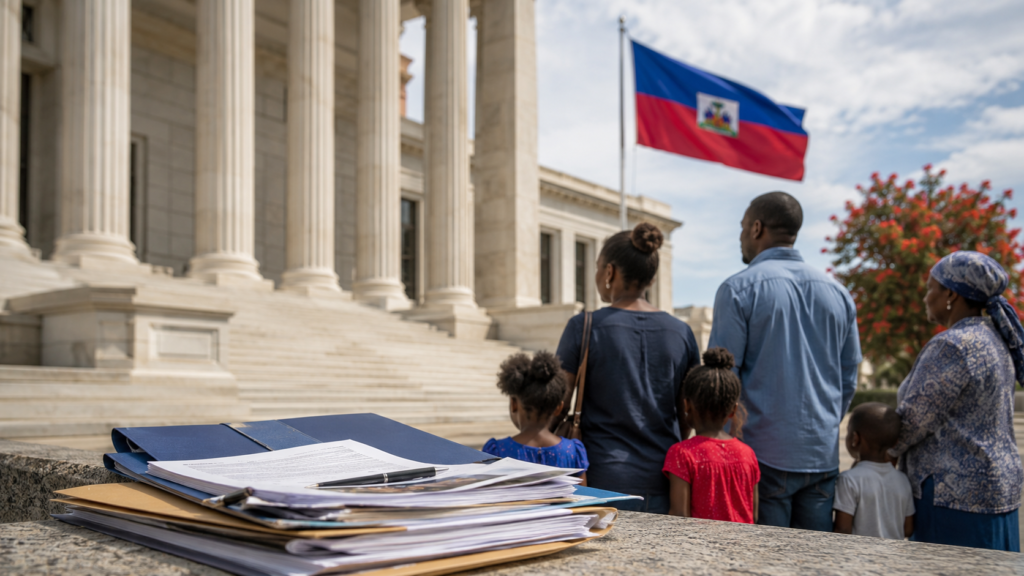
If you or someone you know holds Temporary Protected Status from Haiti, the last few days have brought the news everyone was dreading. On August 5, 2026, U.S. District Judge Ana C. Reyes confirmed that her earlier order protecting Haitian TPS holders is “no longer in effect,” clearing the way for the Trump administration to end legal status and work authorization for roughly 330,000 to 350,000 Haitians living in the United States.
This wasn’t a sudden reversal out of nowhere. It’s the final domino in a legal fight that’s been unfolding since late 2025, one that has moved from a district courtroom in Washington, D.C., all the way to the Supreme Court and back again. If you’ve been trying to keep up with the Judge Ana Reyes TPS Haiti saga and figure out what it actually means for your status, your job, or your family, this guide breaks it all down in plain language.
Here’s what you’ll learn: who Judge Reyes is, how this case got here, what the Supreme Court decided, what the August 5 order actually changes, and what options remain for people affected.
Who Is Judge Ana Reyes?
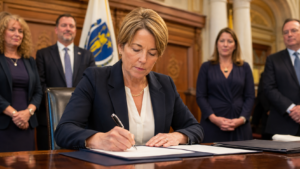
Ana C. Reyes serves as a U.S. District Judge for the District of Columbia. President Biden appointed Reyes to the federal bench, making her the first Latina and openly LGBTQ person to serve as a federal district judge in Washington, D.C. Before joining the bench, Reyes worked as a litigator, including at a major international law firm.
Reyes became a household name among immigration advocates and a frequent target of criticism from the Trump administration after she repeatedly blocked efforts to strip Haitians of Temporary Protected Status throughout early 2026.
During an especially tense February hearing, she read aloud death threats she had received over her rulings and told the courtroom that federal judges “will not be intimidated.” She also responded directly to attacks on her qualifications, saying that her legal career and education, rather than her identity, qualified her for the bench.
That combination of legal rigor and public pushback turned her into one of the most closely watched federal judges in the country’s ongoing immigration battles. It also explains why her name has become so closely linked to the future of Haiti’s TPS program.
A Quick Refresher: How Haiti TPS Ended Up in Court
To understand the federal judge Ana Reyes immigration case, it helps to walk through the timeline:
2010: Haiti First Gets TPS
The U.S. designated Haiti for Temporary Protected Status after the catastrophic 2010 earthquake. TPS allows eligible nationals of designated countries to live and work legally in the U.S. when the government determines that returning home would be unsafe. Federal officials repeatedly extended Haiti’s designation over 16 years, including several expansions under the Biden administration.
November 2025: DHS Announces Termination
Then-Homeland Security Secretary Kristi Noem announced that DHS would end Haiti’s TPS designation. She argued that conditions in Haiti no longer met the legal threshold and that officials had extended the program far beyond what she considered its temporary purpose. DHS scheduled the termination to take effect on February 3, 2026.
February 2026: Judge Reyes Steps In
Five Haitian nationals, along with a broader group of plaintiffs, sued in federal court. Judge Reyes granted a stay, effectively freezing the termination while the lawsuit played out. She later denied the government’s request to lift that stay, ruling that the administration had failed to show it would suffer any real harm from Haitians simply keeping their existing status.
March–June 2026: The Case Heads to the Supreme Court
The government appealed, and the Supreme Court agreed to review the case on an expedited basis, consolidating it with a related case over Syrian TPS holders under the name Mullin v. Doe. Oral arguments were heard April 29, 2026.
June 25, 2026: The Supreme Court Rules
In a 6-3 decision along ideological lines, the Court sided with the administration.
August 5, 2026: Judge Reyes Applies the Ruling
Following the Supreme Court’s judgment and a subsequent order from the D.C. Circuit Court of Appeals, Reyes issued a two-page order acknowledging that her February stay is no longer valid, officially opening the door to Haiti TPS terminations moving forward.
What the Supreme Court Actually Decided in Mullin v. Doe
The supreme court TPS ruling in Mullin v. Doe is the real turning point here, and it’s worth understanding on its own terms.
Writing for the majority, Justice Alito held that federal law bars courts from reviewing most decisions the Secretary of Homeland Security makes about designating, extending, or terminating a country’s TPS status. In other words, Congress gave the executive branch broad, largely unreviewable authority over TPS decisions, and the courts generally can’t second-guess them on procedural or statutory grounds.
The ruling also addressed the plaintiffs’ constitutional argument, that ending TPS for Haiti and Syria amounted to unlawful racial discrimination. The majority found that claim “unlikely” to succeed, though it didn’t shut the door on it completely. That distinction matters, because it’s the one thread of the case that’s still alive.
The practical effect: DHS could move forward with ending TPS for Haiti (and Syria) even while the underlying lawsuit continued. According to tracking from the Center for Migration Studies, the administration formally ended TPS for Syrians on July 17, 2026, and for Haitians on July 27, 2026, with Judge Reyes’ August 5 order removing the last procedural obstacle standing in the way.
What Judge Reyes’ August 5 Order Changes
It’s easy to misread this order as a new ruling against Haitians. It isn’t, exactly. Reyes didn’t decide that ending TPS is legal, the Supreme Court already did that. What her order does is formally acknowledge that her own earlier protection order has been wiped out, and that DHS is now free to enforce the termination it announced back in November 2025.
In the order, Reyes also:
- Denied the administration’s request to pause the discovery process in the ongoing lawsuit
- Confirmed the plaintiffs do not plan to file an amended complaint
- Directed both sides to submit a joint proposal on next steps and deadlines
So while TPS protections themselves have ended, the lawsuit is not over. The equal protection claim, the argument that the termination was motivated by racial animus, is still being litigated, and discovery is moving forward.
What This Means for Haitian TPS Holders Right Now
If you’re a Haiti TPS update reader trying to figure out your actual status, here’s the practical reality as of this ruling:
- Work authorization has expired. Employment authorization documents tied to TPS lapsed alongside the termination taking effect in late July.
- Driver’s licenses may be affected. In states like Ohio and Florida, which tie license eligibility to immigration status, some TPS holders have already lost driving privileges.
- Deportation protections are no longer guaranteed. Without active TPS, individuals are no longer automatically shielded from immigration enforcement or removal proceedings.
- The lawsuit continues. The equal protection claim is still alive, and legal advocates say it’s the one avenue that could still produce relief, though that process could take months.
Geoffrey Pipoly, the lead attorney representing the Haitian plaintiffs, called the August 5 development “a bad day for America and a devastating day for our clients,” while emphasizing that the legal team intends to keep fighting on the constitutional claim.
What Comes Next in the Litigation
This is where the case moves from “will TPS end” to “was ending TPS this way legal.” A few things to watch:
- Discovery continues. Reyes ordered the parties to keep exchanging evidence, though plaintiffs’ attorneys say the government has produced limited, heavily redacted documents so far.
- The equal protection claim is the last real lever. If plaintiffs can show that discriminatory intent, rather than a genuine assessment of conditions in Haiti, drove the termination decision, they could still obtain some form of relief. However, they face a high legal bar.
- Broader TPS terminations are still in motion. The administration has signaled it intends to end protections for more than a dozen other countries covering over a million people, meaning the Mullin v. Doe precedent will likely shape many more cases like this one.
- Congress or the administration could still take action, although neither has proposed anything concrete as of this writing.
Temporary Protected Status, Explained
For readers newer to this topic, it helps to step back and understand the program at the center of it all.
Congress created Temporary Protected Status in 1990 as a humanitarian immigration program. It allows eligible nationals of countries facing armed conflict, environmental disasters, or other extraordinary conditions to live and work legally in the U.S. without fear of deportation while the designation remains active.
TPS does not provide a direct path to permanent residency or citizenship. Congress designed the program as a temporary form of protection tied to conditions in a person’s home country, while the Department of Homeland Security decides whether to extend or end each designation.
Haiti has held TPS designation for 16 years, driven by a combination of natural disaster recovery, political instability, and, more recently, widespread gang violence that has left large parts of the country effectively ungoverned. The State Department continues to advise Americans against traveling there.
Trump Immigration Policy and the Bigger Picture
The Haiti TPS case doesn’t exist in isolation. It’s part of a broader push by the Trump administration to scale back humanitarian immigration protections across the board, framing TPS extensions granted under previous administrations as overreach. Supporters of the policy argue that Congress designed TPS as a temporary program, not a long-term or semi-permanent status, and that ending it restores the program’s original, narrow purpose. Critics counter that conditions in Haiti remain genuinely dangerous, and that ending protections abruptly puts hundreds of thousands of long-settled, working immigrants, including families with U.S. citizen children, at risk of return to an unstable country.
Both sides agree on one thing: the Mullin v. Doe decision will influence how courts handle every future TPS challenge, not just Haiti’s.
Frequently Asked Questions
Q1: Did Judge Ana Reyes rule against Haitian TPS holders?
Not directly. Judge Reyes originally ruled in favor of Haitian TPS holders by blocking the termination. Her August 5, 2026 order simply confirms that the Supreme Court overturned her earlier protective order, allowing the termination to move forward. She did not decide whether ending TPS was constitutional or fair. Courts are still considering that question.
Q2: Is Haiti TPS completely over?
As of this ruling, TPS protections and work authorization for Haitian nationals have ended. However, the underlying lawsuit over whether the termination violated equal protection guarantees is still active, meaning the legal fight isn’t fully resolved.
Q3: How many Haitians are affected by this ruling?
Estimates range from roughly 330,000 to 350,000 Haitian nationals who previously held TPS.
Q4: What should Haitian TPS holders do now?
Anyone affected should consult with a qualified immigration attorney or a nonprofit legal aid organization immediately to explore other potential forms of relief, understand their individual risk of removal, and get accurate, personalized guidance, general news coverage can’t substitute for case-specific legal advice.
Q5: Can this ruling still be appealed or reversed?
The Supreme Court’s decision in Mullin v. Doe is final on the procedural question of whether courts can pause TPS terminations. However, the separate constitutional claim about discriminatory intent remains open in the lower court, and its outcome is not yet decided.
Final Thoughts
The judge Ana Reyes TPS ruling saga is a reminder of how immigration law can shift dramatically based on a single Supreme Court decision, even when a lower court judge has ruled the opposite way multiple times. For the hundreds of thousands of Haitians whose work authorization and protection from deportation just ended, the coming weeks and months will be about finding whatever legal options remain, however narrow.
If this situation affects you or your family, don’t wait to get informed guidance. Reach out to a licensed immigration attorney or a trusted legal aid organization as soon as possible to understand your specific options, and keep checking back here for continuing coverage as this case develops.
This article reflects publicly reported court filings and news coverage as of August 6, 2026. Immigration law changes quickly, always verify your personal situation with a qualified attorney.