


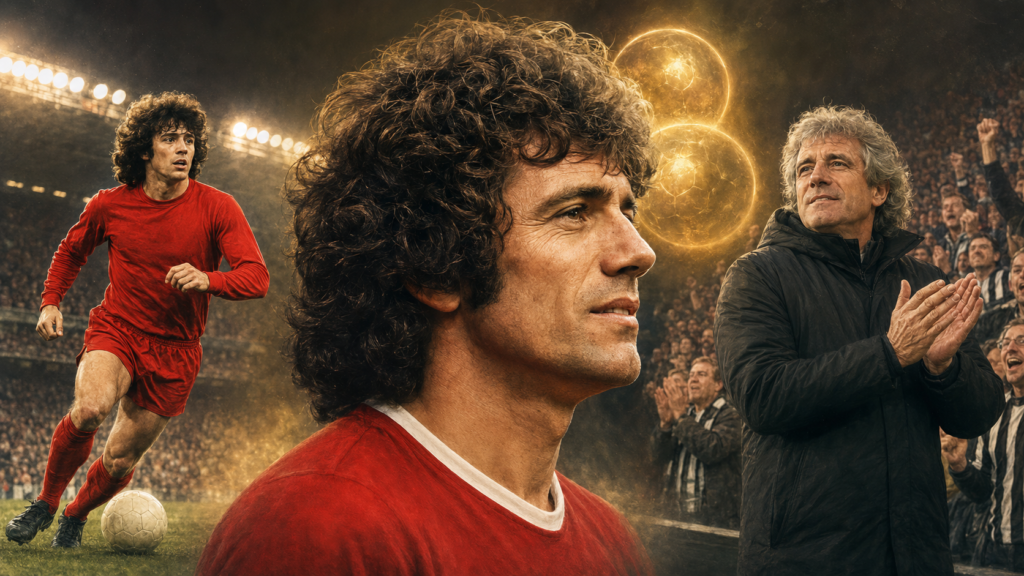
Football fans around the world are mourning Kevin Keegan, who died on July 20, 2026, at the age of 75. : Kevin Keegan, one of English football’s most beloved and charismatic figures, has died at the age of 75. The announcement, made by his family, brings to a close the story of a man who was as electrifying on the pitch as he was in the dugout, a two-time Ballon d’Or winner, a former England captain, and later a Premier League manager whose passion for the game became legendary in its own right.
For anyone who grew up watching English football in the 1970s, 80s, and 90s, Kevin Keegan wasn’t just a player or a manager; he was a personality who made the sport feel alive. This article looks back at his remarkable career, the cause of his death, and the outpouring of tributes from clubs, players, and fans who considered him a hero.
Kevin Keegan Cause of Death: What We Know
Keegan’s family confirmed that he passed away after a battle with stage four cancer. According to reports, Newcastle United had shared a statement in January revealing that Keegan had been hospitalized for evaluation of ongoing abdominal symptoms, which led to the cancer diagnosis. He began treatment shortly afterward.
In their statement announcing his passing, the family shared that he was surrounded by his wife and daughters in his final moments and thanked his medical team for their care throughout his treatment. Keegan was 75 years old.
While the news is undeniably sad, it also offers a moment for fans to reflect on an extraordinarily full life, one built on grit, charisma, and an unmatched love for football.
Who Was Kevin Keegan? A Brief Introduction
Kevin Keegan was born in Armthorpe, near Doncaster, England, and rose from humble beginnings to become one of the most decorated and recognizable footballers of his generation. Nicknamed “King Kev” by adoring fans, he built a reputation not just for his goals, but for his relentless work ethic, infectious enthusiasm, and natural leadership on and off the field.
Keegan’s career can be broken into distinct chapters, each one adding another layer to his legendary status: a trophy-laden spell at Liverpool, a groundbreaking stint in German football, a heroic homecoming at Newcastle United as a player, and later, a rollercoaster managerial career that included leading Newcastle’s famous title chase and managing the England national team.
Kevin Keegan’s Career at Liverpool
Keegan’s rise to stardom began at Liverpool, which he joined in 1971 after being scouted from Scunthorpe United. Under legendary manager Bill Shankly, Keegan quickly became a fan favorite thanks to his tireless running, sharp finishing, and never-say-die attitude.
During his time at Anfield, Keegan helped Liverpool dominate English and European football, winning:
- Three First Division titles
- The FA Cup
- Two UEFA Cups
- The European Cup
His partnership with striker John Toshack became one of the most feared attacking duos in English football, and by the mid-1970s, Keegan had established himself as one of the best players in the world.
Beyond Liverpool: Hamburg and the Ballon d’Or Years
In 1977, Keegan surprised many by leaving Liverpool at the peak of his powers to join German club Hamburger SV. It was a bold move; foreign transfers were rare for English stars at the time, but it paid off spectacularly.
At Hamburg, Keegan proved his brilliance wasn’t limited to English football. He won back-to-back Ballon d’Or awards in 1978 and 1979, becoming the first British player to win the prestigious honor twice. This achievement alone cemented his place among football’s true legends, and to this day, few English players have matched that level of individual recognition on the world stage.
Kevin Keegan Newcastle United: A Love Story in Two Acts
If Liverpool made Keegan a star, Newcastle United made him a legend. He signed for the Magpies as a player in 1982, and his arrival is still remembered as one of the most sensational transfer stories in English football history. Newcastle, then in the second tier, saw attendances soar, and expectations rise almost overnight.
Keegan’s return to Newcastle as manager in 1992 is arguably the chapter most fans associate with his legacy. Taking charge of a struggling side in danger of relegation to the third tier, Keegan transformed the club’s fortunes, guiding them to promotion and then to the brink of Premier League glory during the unforgettable 1995–96 season, when Newcastle narrowly missed out on the title to Manchester United.
Newcastle United paid tribute to Keegan following the news, describing him as one of the most influential and cherished figures in the club’s history, a sentiment echoed by supporters across social media in the hours following the announcement.
Kevin Keegan England Captain and National Team Career
Keegan’s influence extended well beyond club football. He earned 63 caps for the England national team, scoring 21 goals, and captained his country during a period when English football was searching for identity and direction on the international stage.
Years later, Keegan returned to the national team, this time as manager, taking charge of England between 1999 and 2000. While his time in the role was relatively brief and ultimately did not end with major silverware, his passion for representing his country never wavered, and many fans still regard him as one of England’s most passionate ambassadors.
Kevin Keegan’s Legacy in Football
It’s difficult to summarize Kevin Keegan’s legacy in football in just a few sentences, because his impact touched so many different areas of the sport:
As a player, he showed how determination and relentless effort could transform raw talent into world-class brilliance.
In management, he revived attacking, fearless football at a time when caution often dominated the English game.
Beyond tactics and results, his personality made football feel more human, emotional, honest, and unscripted, whether he celebrated wildly on the touchline or spoke candidly to the press.
Younger fans who never saw Keegan play may still recognize his name through football folklore, documentaries, or the countless “Keegan Newcastle 96” highlight reels that continue to circulate online. His style of management, high-energy, attacking, and emotionally invested, influenced a generation of English coaches who followed.
Tributes Pour In From Across the Football World
In the hours following the announcement of his death, tributes began flooding in from clubs, former teammates, and fans alike. Liverpool and Newcastle United both issued heartfelt statements honoring his contributions, while former players and pundits took to social media to share personal memories of his warmth, humor, and dedication to the sport.
Many tributes highlighted not just his footballing achievements, but his character, a man who never lost his connection to ordinary fans, despite reaching the very top of the game.
Frequently Asked Questions
Q1. How old was Kevin Keegan when he died?
Kevin Keegan was 75 years old at the time of his death.
Q2. What was Kevin Keegan’s cause of death?
Keegan’s family confirmed he had been battling stage four cancer, having been diagnosed and beginning treatment earlier in the year.
Q3. Did Kevin Keegan win the Ballon d’Or?
Yes. Keegan won the Ballon d’Or in both 1978 and 1979 while playing for Hamburger SV, making him the first British player to win it twice.
Q4. Which clubs did Kevin Keegan play for?
Keegan played for Scunthorpe United, Liverpool, Hamburger SV, Southampton, and Newcastle United during his playing career.
Q5. Did Kevin Keegan manage the England national team?
Yes. Keegan managed England from 1999 to 2000, in addition to his managerial roles at Newcastle United, Fulham, and Manchester City.
Final Thoughts: Remembering a Football Icon
Kevin Keegan’s death marks the end of an era for English football. From his goal-scoring days at Liverpool to his emotional, all-in management style at Newcastle, Keegan represented a version of football built on passion, courage, and authenticity. His two Ballon d’Or awards, England captaincy, and unforgettable managerial spells ensure his name will remain etched in football history for generations to come.
As fans, players, and clubs continue to share their memories and tributes, one thing is clear: Kevin Keegan wasn’t just a footballing great, he was a beloved figure whose energy and honesty made the game better for everyone who watched him.
Rest in peace, King Kev.
Editorial Note: This article is based on statements released by Kevin Keegan’s family and reporting from sports news outlets covering his passing. Details may be updated as further information, including funeral arrangements or additional tributes, becomes available.